Last updated November 21, 2026
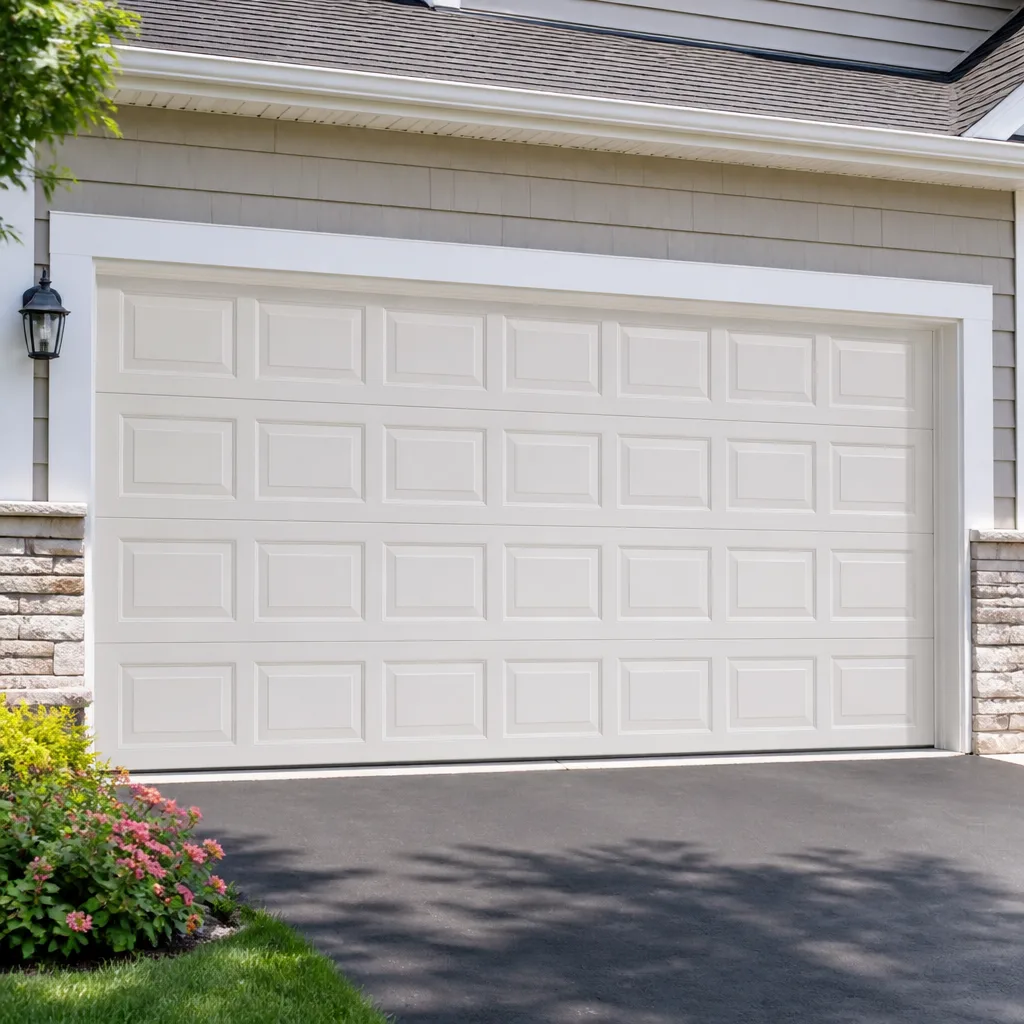 Raised-panel steel
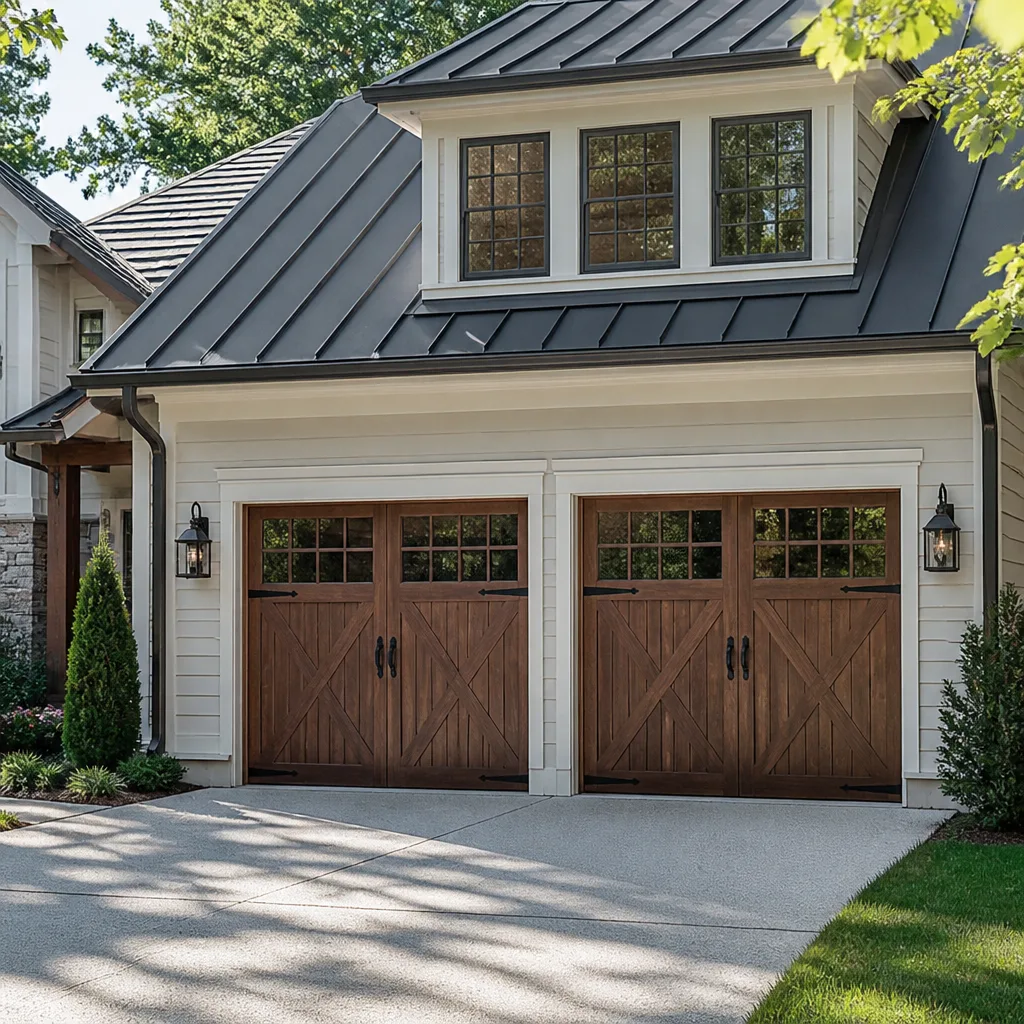 Carriage house
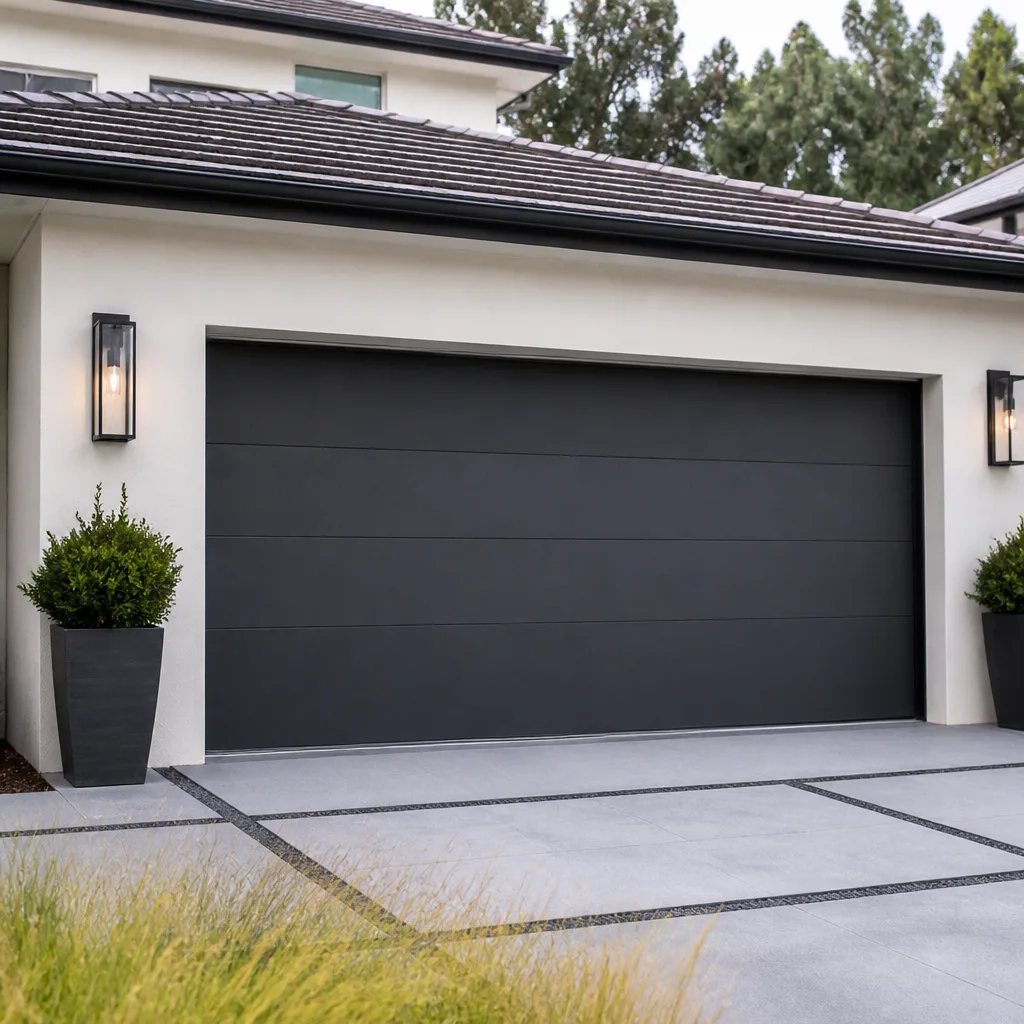 Modern flush
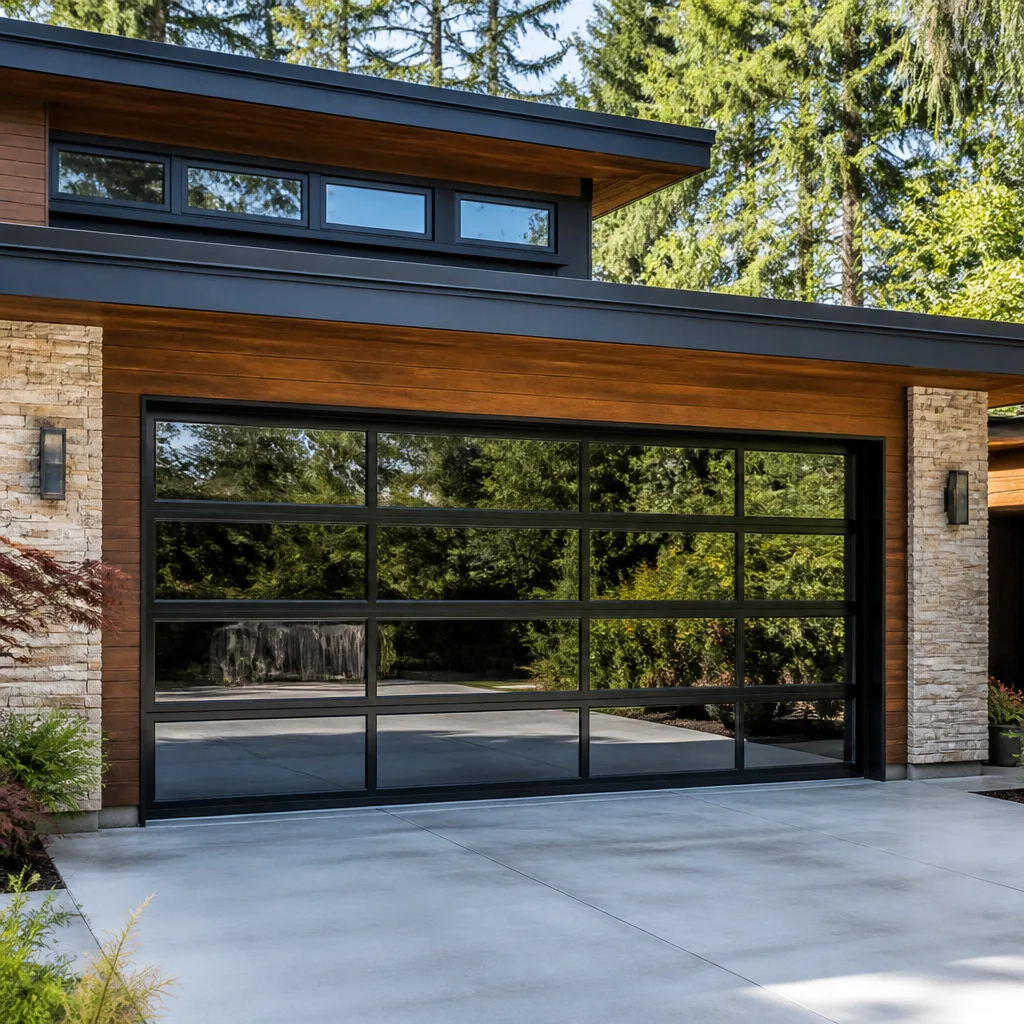 Full-view glass
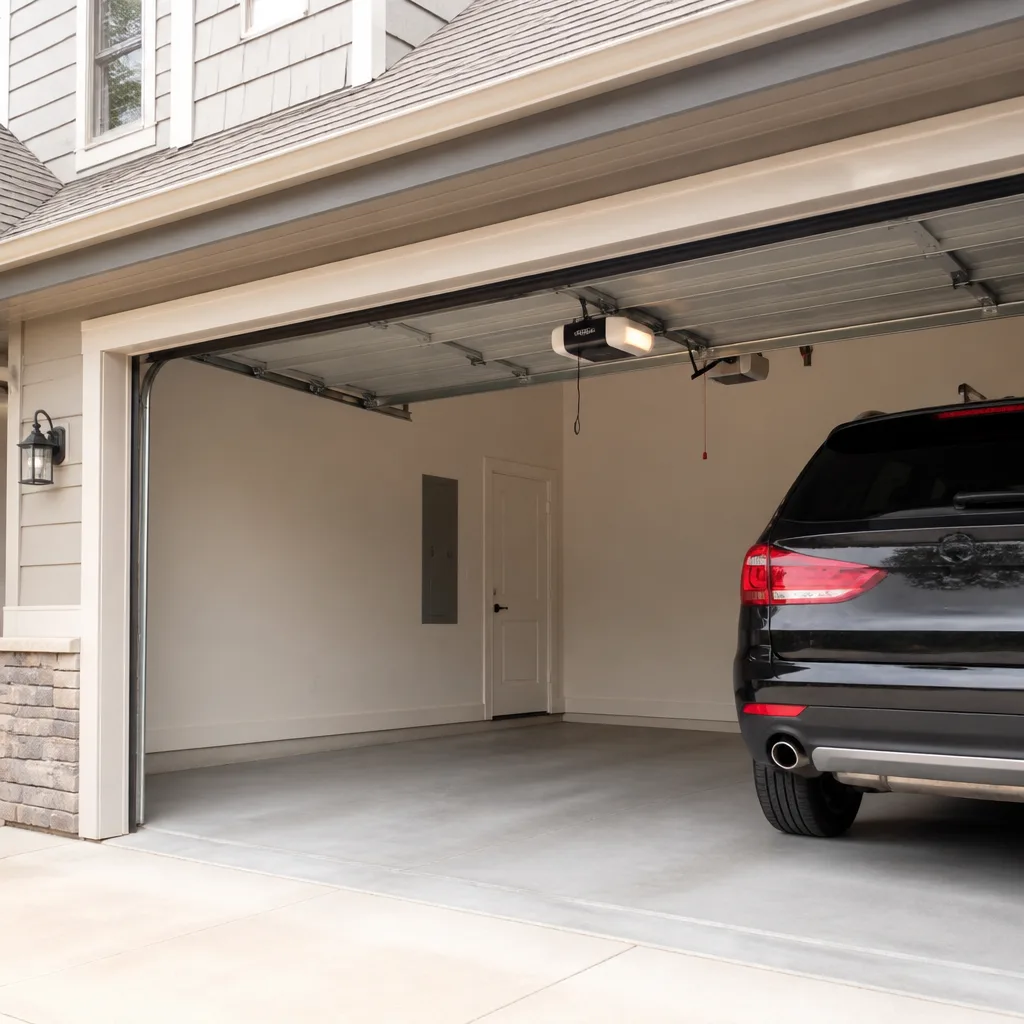 LiftMaster openers
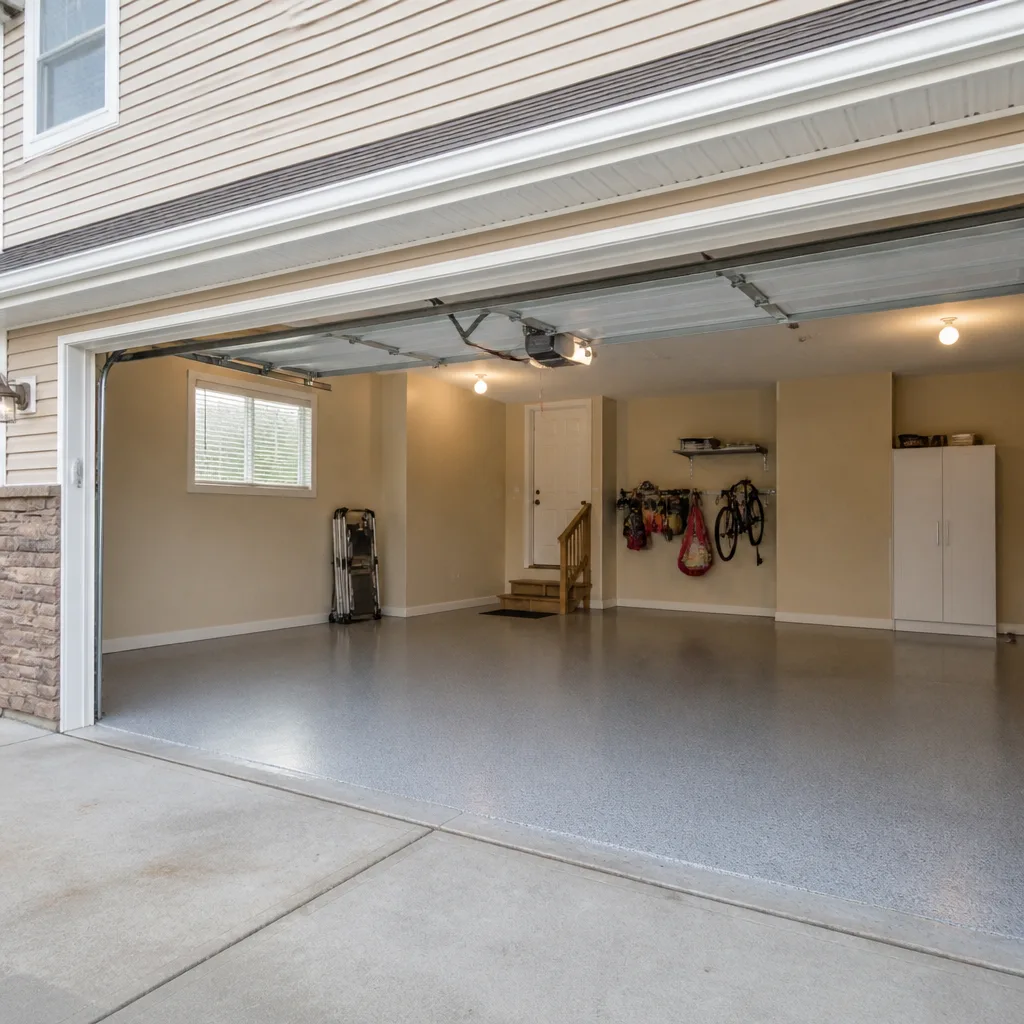 Chamberlain openers
Full 25-point door and opener safety check with every visit - springs, cables, rollers, tracks, and your LiftMaster or Chamberlain opener included
You get a price before we start. It does not change when the pro arrives.
Get your free estimateThe Complete Guide to Garage Doors in Shadyside
Most Shadyside garages were built for cars from another era – narrower openings, shallower headroom, and alley access that makes standard installation advice useless. Walk any of the alleys behind the rowhouses off Ellsworth or Walnut and you’ll see what we mean: single-bay detached garages tucked tight against a neighbor’s wall, doors sized to the width of a car that stopped being built generations ago, and openers mounted wherever there happened to be a ceiling. The advice you find online usually assumes a modern two-car suburban garage with a wide approach and a full-height ceiling. Very little of it applies here. This guide starts from what Shadyside actually has – the historic housing stock, the narrow lots, the hills, and Pittsburgh’s freeze-thaw cycle – and works backward to what fits, what fails first, and when repair is the smart move versus replacement.
Quick Answer
Garage doors in Shadyside need to be sized to the constraints of older, often alley-access garages – which usually means low-headroom, side-mount or custom-width solutions rather than off-the-shelf panels. Pittsburgh’s repeated freeze-thaw cycles wear out springs, hinges, rollers and opener drive components faster than drier climates, so hardware spec and maintenance matter more here than in most parts of the country. Repair is usually the right call when cables, rollers, springs or an opener are the only failure; full replacement makes more sense when the door panels, tracks and framing are all worn and the cost of patching outweighs a new door.
Styles & brands we work with
- Raised-panel steel
- Carriage house
- Modern flush
- Full-view glass
- LiftMaster openers
- Chamberlain openers
Table of Contents
- How Shadyside’s Housing Stock Shapes Every Door Decision
- Which Door Types Actually Fit Shadyside Garages
- Why Pittsburgh’s Freeze-Thaw Cycle Eats Garage Door Hardware
- Repair or Replace? A Practical Decision Framework
- Springs and Torsion Systems: The Part You Should Never Touch
- Matching an Opener to a Small Garage and an Old Door
- Coordinating Work on a Dense, Neighbor-Adjacent Lot
- What Garage Door Work Typically Costs in Shadyside
How Shadyside’s Housing Stock Shapes Every Door Decision
The first thing a garage door specialist notices in Shadyside isn’t the doors. It’s the buildings around them. Rowhouses, brick four-squares, and early twentieth-century detached garages line the alleys at the backs of the lots, and almost none of them were built with today’s door dimensions in mind.
Three constraints come up again and again on Shadyside properties:
- Opening width and height. Many garages in the neighborhood were built with openings sized for cars from the 1920s through the 1950s. A standard modern door is a little too wide or a little too tall for much of the existing framing, which pushes most jobs toward custom-width or custom-height order rather than off-the-shelf.
- Alley access. Lots off the main commercial streets are frequently reached by a shared rear alley. Approach space is short, driveways are steep or short, and pulling a delivery truck in to stage a door is a logistical problem you don’t have in a suburban cul-de-sac.
- Headroom and ceiling height. Detached garages built for early cars often have shallow ceiling height – sometimes under seven and a half feet – which rules out standard ceiling-mounted torsion hardware and many standard opener rails.
The practical result is that garage door work in Shadyside starts with a measure-up, not a product catalog. Measuring the opening, confirming backing and framing, checking ceiling height, and confirming how a truck can reach the garage are all part of the estimate. On many jobs, what fits is chosen by the building, not by preference. We measure every opening in person before quoting for exactly this reason.
Which Door Types Actually Fit Shadyside Garages
Once you know the three constraints above, the door options narrow themselves. For most Shadyside jobs, one of four solutions lands cleanly.
Low-headroom sectional doors
A sectional door that uses low-headroom torsion hardware – where the spring shaft is mounted forward instead of directly above the top panel – is often the only way to get a modern sectional into a shallow-ceiling garage. This is common in the small detached garages behind homes off Ellsworth and Walnut.
Side-mount or wall-mount opener systems
When headroom is missing overhead, a jackshaft-style opener that mounts beside the torsion bar solves the problem without a rail hanging from the ceiling. Raynor and LiftMaster both make opener systems designed for this, and this is one of the most common upgrades we handle in the neighborhood.
Custom-width roll-up or single-panel doors
For very narrow alley-access garages, a custom-width panel or a roll-up style door eliminates the swing radius and fits openings where a sectional simply won’t. These are ordered to size and require longer lead time, but they’re the right answer where nothing else fits.
Older-style panel or carriage doors when the architecture calls for it
Some Shadyside garages sit beside property that carries a strong historic character, and a basic raised-panel sectional looks wrong next to the house. Carriage-style doors with appropriately matched trim and finish are common here, and modern openers can be integrated with them so you keep the look and the convenience.
The best way to compare options is to have a specialist measure and walk you through which of the four actually fits your opening and ceiling. Through our garage door installation service, we do exactly that on every Shadyside quote.
Why Pittsburgh’s Freeze-Thaw Cycle Eats Garage Door Hardware
Freeze-thaw is the single most underappreciated reason garage doors in Shadyside wear out sooner than their rated life. It works like this: water gets into a hinge pin, a roller bearing, or the gap between a bottom seal and the floor. Temperatures drop below freezing overnight and the water expands into ice. That ice forces metal apart a fraction of an inch. It thaws the next day, but the gap is now slightly wider, and next time more water gets in. Repeat that cycle through a Pittsburgh winter and the accumulation is very real wear.
What we see in Shadyside as a direct result:
- Bottom seals crack and detach faster than in drier climates. A failed seal lets water in under the door, and the problem compounds.
- Rollers and hinge pins seize and start to squeal. Ignored, they stress the opener drive and the springs.
- Steel panels show rust at the bottom edge and along the seams from a combination of road splash, melting snow, and repeated wet-dry cycling.
- Torsion springs cycle harder. Springs are rated by cycle count, not years, so a door that opens and closes several times a day in a household with an active driveway wears them out sooner.
Local priority when you’re choosing a door: look for a bottom seal with a heavy rubber or vinyl profile, rollers with sealed bearings, hot-dipped galvanized hinges, and a steel panel with a factory-applied finish that resists chipping at the seams. These details cost a bit more up front and save you repairs. It’s a small investment compared to the door itself, and it’s the difference between a door that lasts and a door you’re constantly patching.
Repair or Replace? A Practical Decision Framework
Homeowners ask which is the right move more than almost any other question, and the honest answer depends on which parts have actually failed. A door is a system, and if the panels are sound and the track is straight, repair almost always beats replacement.
Repair is usually the answer when:
- The door is stuck open or closed, and one or two components (a spring, a cable, a roller) are the failure point
- The opener has stopped working but the door itself moves freely by hand and sits level
- A dent or a single damaged panel can be replaced without disturbing the rest of the assembly
- The door is out of balance but the panels and track are in good condition
Replacement becomes the better value when:
- The panels are rusted through or delaminating at the bottom edge and seams
- The track is bent or the framing is soft, meaning a new door needs new mounting anyway
- The door is so far out of balance that the springs, cables, rollers, track and panels are all near the end of their life at once
- The door size or type is causing more problems than it solves – for example, a wide sectional in a shallow-ceiling garage that chews through openers
A reasonable rule: if the cost of the repairs you’d need is more than half what a new door of the same size would cost, and the door is already showing panel-level wear, replacement is the more economical path over the next several years. Otherwise repair.
For most troubleshooting calls in Shadyside, the answer is repair, not replacement. Our garage door repair service is built around that idea – get the door working, don’t sell a new one unless the numbers say otherwise.
Springs and Torsion Systems: The Part You Should Never Touch
Torsion springs and the cables that balance a garage door are stored mechanical energy, and they are the single most dangerous component in the entire system. This isn’t a warning thrown in for legal reasons. A torsion spring under load can release violently enough to cause serious injury, and no amount of online video watching changes the fact that setting and tensioning a spring requires specific tools, technique, and training. Do not attempt to replace, adjust, or untension a garage door spring or cable yourself. If you hear a loud bang from your garage and the door won’t lift, the spring has likely failed – leave the door closed, keep the area clear, and call a specialist.
What a professional spring repair involves:
- Confirm the failure. Check that the spring has actually broken (usually a visible gap in the coil) and not that a cable has slipped off.
- Isolate the door. The door is held in the closed position (or propped safely) so the broken spring can’t allow it to fall.
- Remove and match. The old spring is removed and replaced with one matching the door’s weight, height, and cycle rating. An undersized spring on a heavy door is a failure waiting to happen.
- Balance and test. The door is opened and closed by hand to confirm the new springs balance it correctly through the full travel.
- Reconnect and cycle-test the opener. The travel limits and safety reverse are checked so the opener isn’t fighting the door.
Torsion springs are almost always replaced as a matched pair, since a broken spring usually means its partner is a few thousand cycles away from the same failure. In Shadyside, where many garages are used several times a day, replacing one spring and leaving the other is common false economy. If you’re hearing a bang, seeing a broken spring, or noticing a door that’s suddenly heavy to lift, our Garage Door Repair Shadyside team handles spring work as a routine part of the service – not as an afterthought.
Matching an Opener to a Small Garage and an Old Door
Openers go wrong in the same handful of ways in Shadyside, and the fix usually depends on the brand and the age of the unit. We work on LiftMaster, Chamberlain, Genie, Raynor, Craftsman, Clopay, Amarr and Wayne Dalton systems as a matter of routine, which means we can work with whatever is already installed rather than pushing a replacement.
The common opener failures we see in the neighborhood:
- Dead remotes or a wireless keypad that won’t program. Usually a battery, a lost pairing, or a logic board failure – quick to diagnose and usually quick to fix.
- The door reverses immediately or stops before closing. This is often a safety-sensor issue, a travel-limit problem, or the door binding on a worn roller. It’s worth fixing quickly, because a door that won’t close is a security problem.
- The opener runs but the door doesn’t move. A stripped gear or a failed drive coupler. On older units, replacing the gear is often cheaper than replacing the opener.
- Smart-home integrations that stop working. Many newer openers from LiftMaster and Chamberlain tie into apps and home automation. When those stop responding, we treat the network side and the opener side as one problem.
On Shadyside’s smaller garages, the opener often has to be selected to fit, not just chosen for features. A jackshaft-style opener lets you use a full-size door in a low-headroom space. A belt-drive opener is the right call where the garage wall is shared with a neighbor, since it runs quieter. Our garage door opener repair service covers all of that, from a dead remote to a full replacement opener in a snug ceiling.
Coordinating Work on a Dense, Neighbor-Adjacent Lot
Shadyside jobs are almost never standalone. Garages back onto shared alleys, walls touch the neighbors’ walls, and access runs through someone else’s property line. Coordinating the work so it happens without friction is part of doing the job right here.
What to plan for before work starts:
- Access and staging. Confirm where the truck can park, how long it can stay, and where the old door and packaging will go. In the alleys behind the rowhouses off Ellsworth, this is often the single biggest scheduling consideration.
- Neighbor notice. If the work is going to involve loud noise – drilling into brick, cutting a track, running a hammer drill for anchors – a heads-up to a shared-wall neighbor goes a long way.
- Timing. We can work early mornings or Sundays where a quieter schedule matters, and we keep noise-heavy steps to the early part of the day where the plan allows.
- Permits. Most cities require a permit for structural work on a garage and sometimes for a new opener installation, so ask your city’s building department before work starts. The specific requirement depends on the scope; we can tell you what we’ve seen in Shadyside and you can confirm with the department.
- Property lines. On a narrow lot where the garage sits right at the boundary, confirm the door can fully travel and there’s clearance for the new track and hardware without crossing into the neighbor’s space.
One more Shadyside detail: hills. Many driveways in Shadyside run down toward the street, which means the opener and door must be sized assuming gravity is working against them during closing. A door that’s fine on a flat lot can need a heavier opener here. That’s another reason a measure-up before you buy is the right first step in Shadyside.
What Garage Door Work Typically Costs in Shadyside
Pricing below reflects typical, estimated ranges for Shadyside work; the written estimate from the specialist is the final figure. The ranges depend on door size, brand, custom vs off-the-shelf, and how much correction the existing framing needs.
| Service | Typical Estimated Cost | Notes |
|---|---|---|
| Spring replacement (single spring) | $180 – $340 | Per spring. Torsion springs are usually replaced as a matched pair, so a pair runs about twice the single-spring range. |
| Cable or roller replacement | $150 – $280 | Includes adjustment and balance check. |
| Track realignment or replacement | $200 – $450 | Depends on whether the track is straightened or replaced. |
| Opener repair (gear, drive, board) | $180 – $420 | Varies by opener brand and whether a logic board is involved. |
| New opener installation (standard) | $400 – $800 | Standard ceiling-mounted opener, existing wiring in good condition. |
| New opener installation (jackshaft or belt-drive for low-headroom) | $550 – $1,000 | Common in Shadyside’s small detached garages. |
| New single-car sectional door (standard size) | $1,200 – $2,500 | Includes removal of old door and basic track hardware. |
| Custom-width or custom-height door | $2,000 – $4,500 | Common in Shadyside where the opening was sized for an older car. |
What changes the price
- Custom sizing. Off-the-shelf doors are cheaper; Shadyside openings frequently need custom, which is the biggest single driver of price.
- Opener type. Jackshaft and belt-drive openers cost more than a standard chain-drive unit, but they solve constraints that a standard opener can’t.
- Framing and mounting condition. If the existing wood or brick is soft or not plumb, mounting takes longer.
- Access. A tight alley adds staging time. A garage where the truck can’t reach the opening is a different job than one where it can.
For a straightforward garage door repair – cable, roller, track, opener – the price is quoted and agreed in writing before any work starts. That means you know the number before the technician touches the door. See our Shadyside garage door repair service for DIY troubleshooting steps we recommend before calling us out on a small issue.
Common Mistakes to Avoid
- Ordering a standard size door before measuring the opening. In Shadyside’s older garages, a “standard” door is often a fraction of an inch too wide or too tall, and it won’t fit without reworking the framing. Measure the height, width, and headroom before you order anything.
- Fitting a standard ceiling-mounted opener in a shallow garage. The opener will mount but the door won’t travel. Check the ceiling height and go straight to a jackshaft-style opener if headroom is tight.
- Replacing a spring and leaving its partner. A pair of torsion springs on the same door sees the same wear, and the surviving spring is often close to breaking. Plan on the pair.
- Ignoring the bottom seal. A torn or worn seal lets water into the garage and accelerates freeze-thaw damage to the bottom panel and hinges. It’s one of the cheapest parts to replace and one of the most important locally.
- Trying to adjust or replace a torsion spring yourself. This is the mistake that causes serious injury. Don’t do it. Call a specialist.
- Not checking the tracking and balance after a repair. A door that’s been repaired but not rebalanced will wear the opener and the springs out faster, and you’ll be back in the same spot soon.
- Skipping the permit question. Some garage structural work and some new installations require a permit in Shadyside. Ask the city’s building department before work starts, not after.
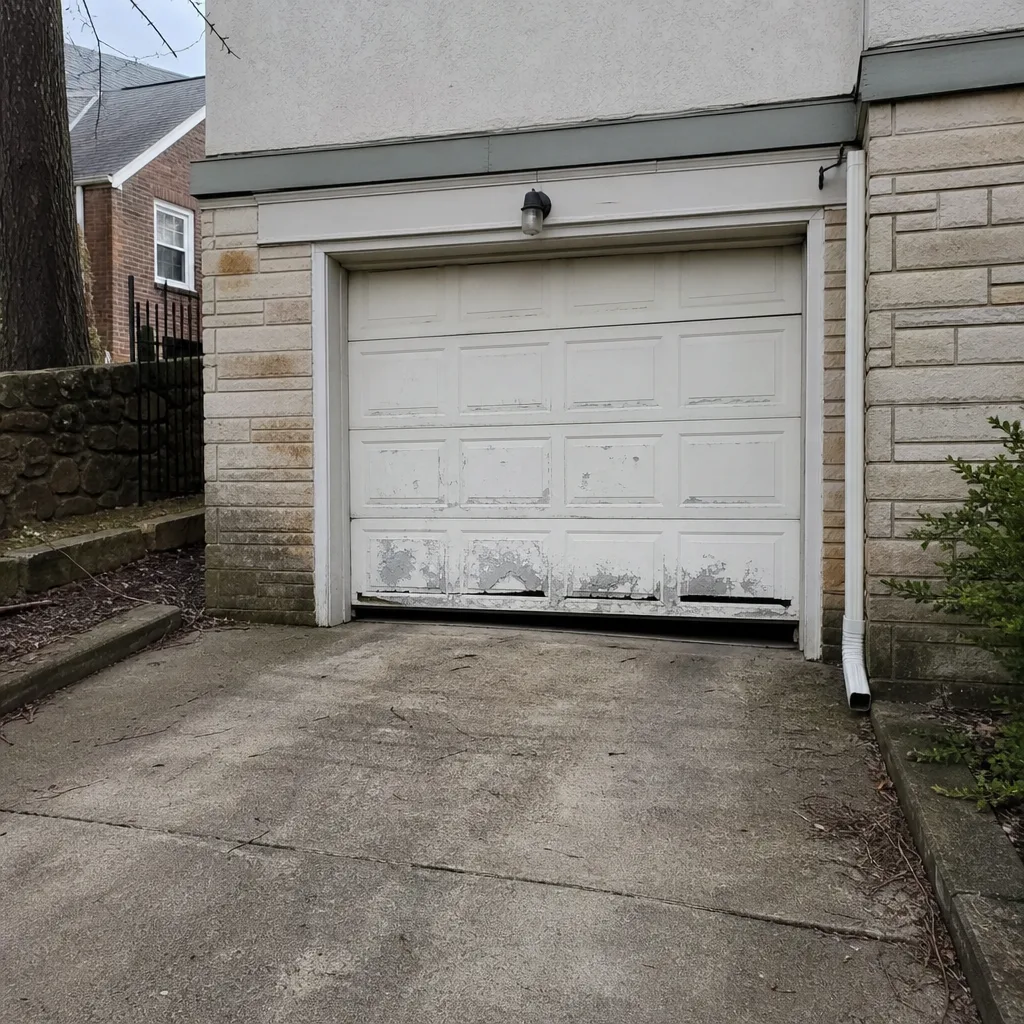
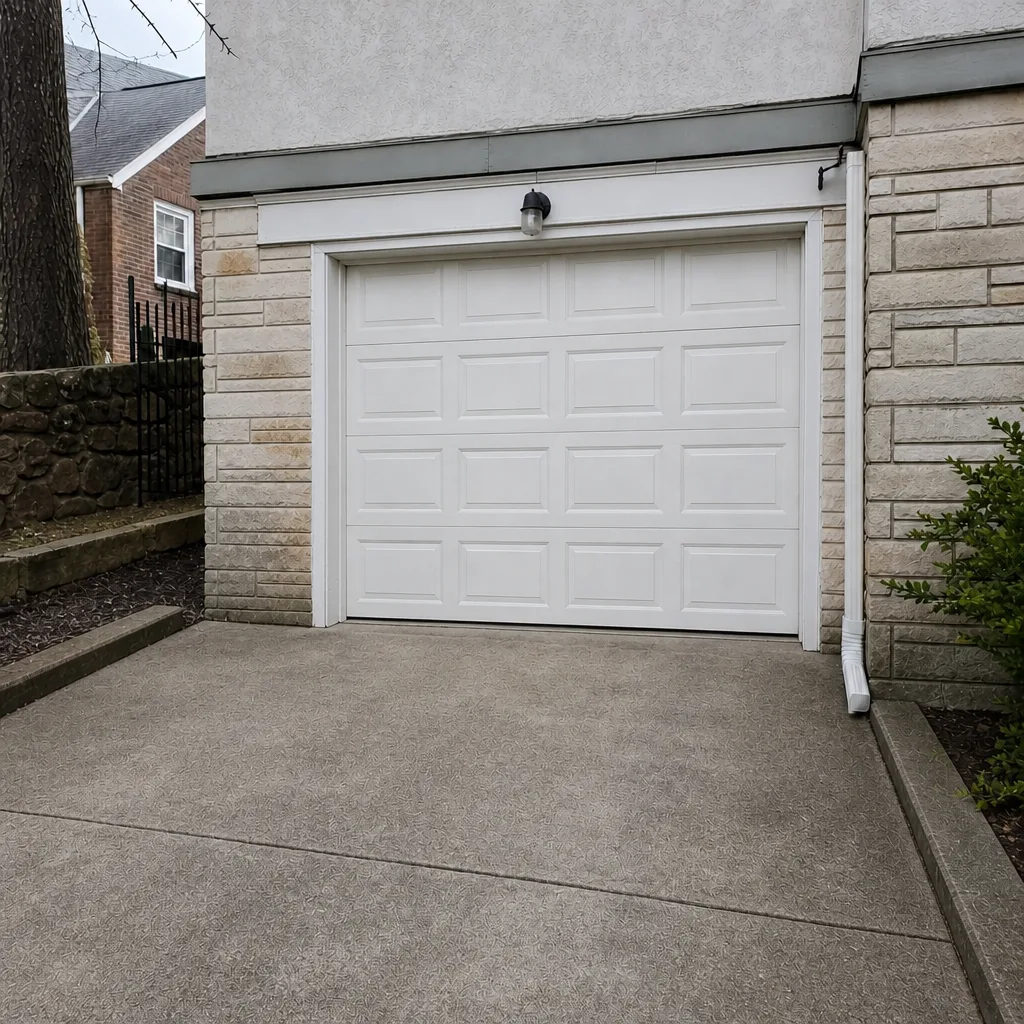
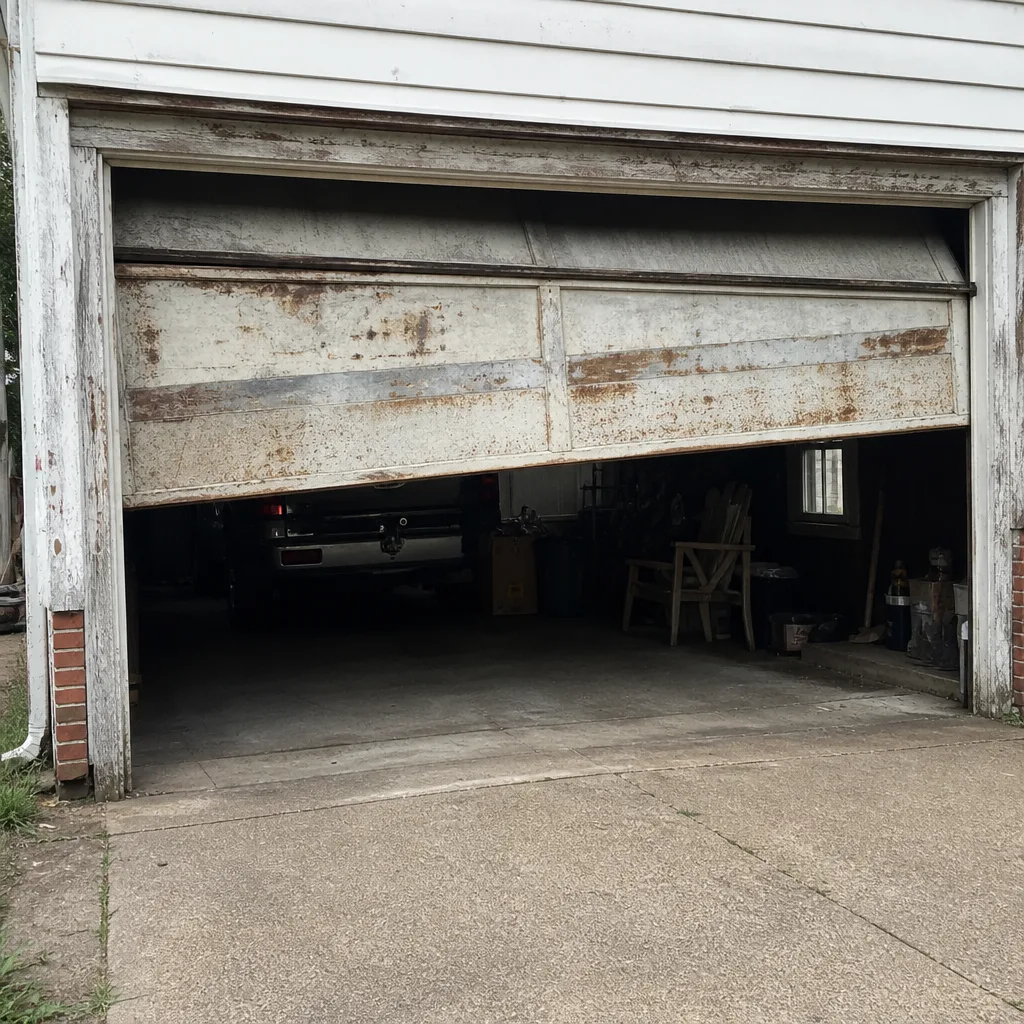
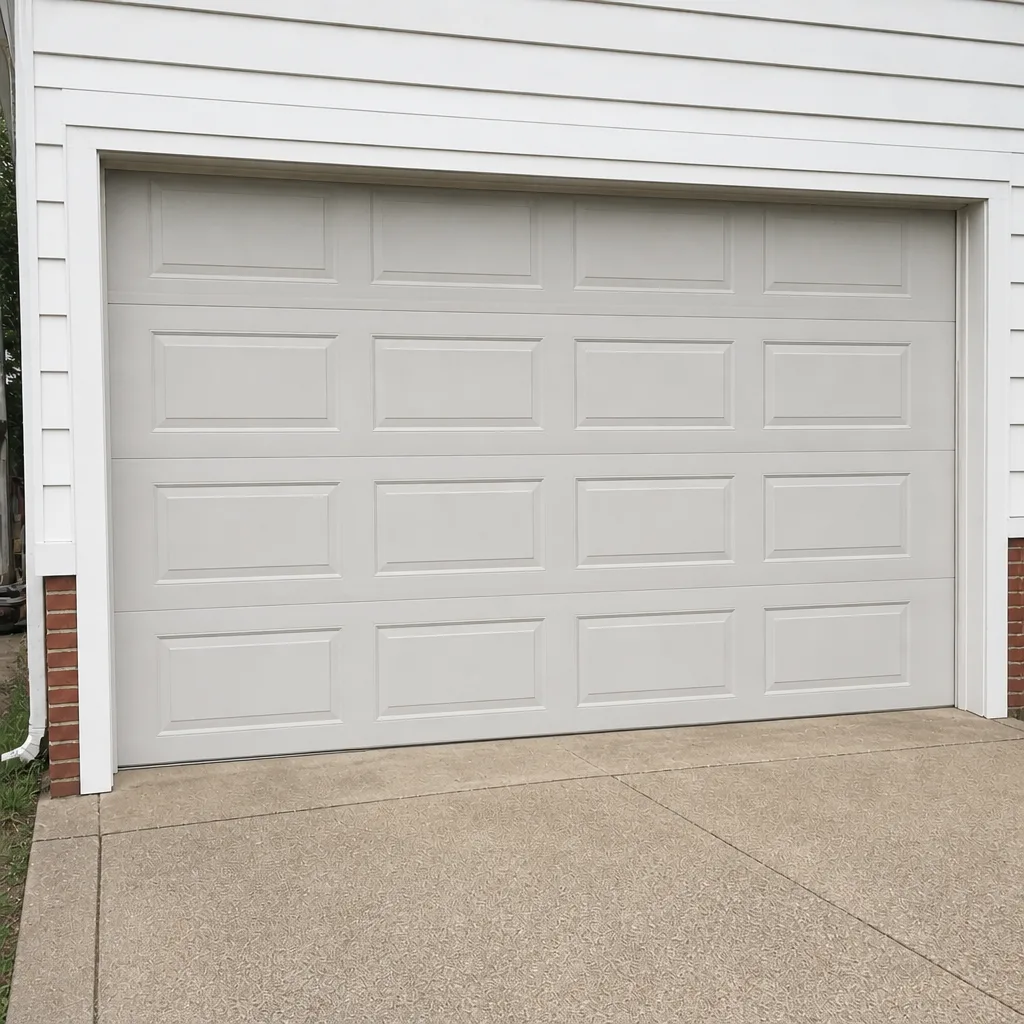
See the difference
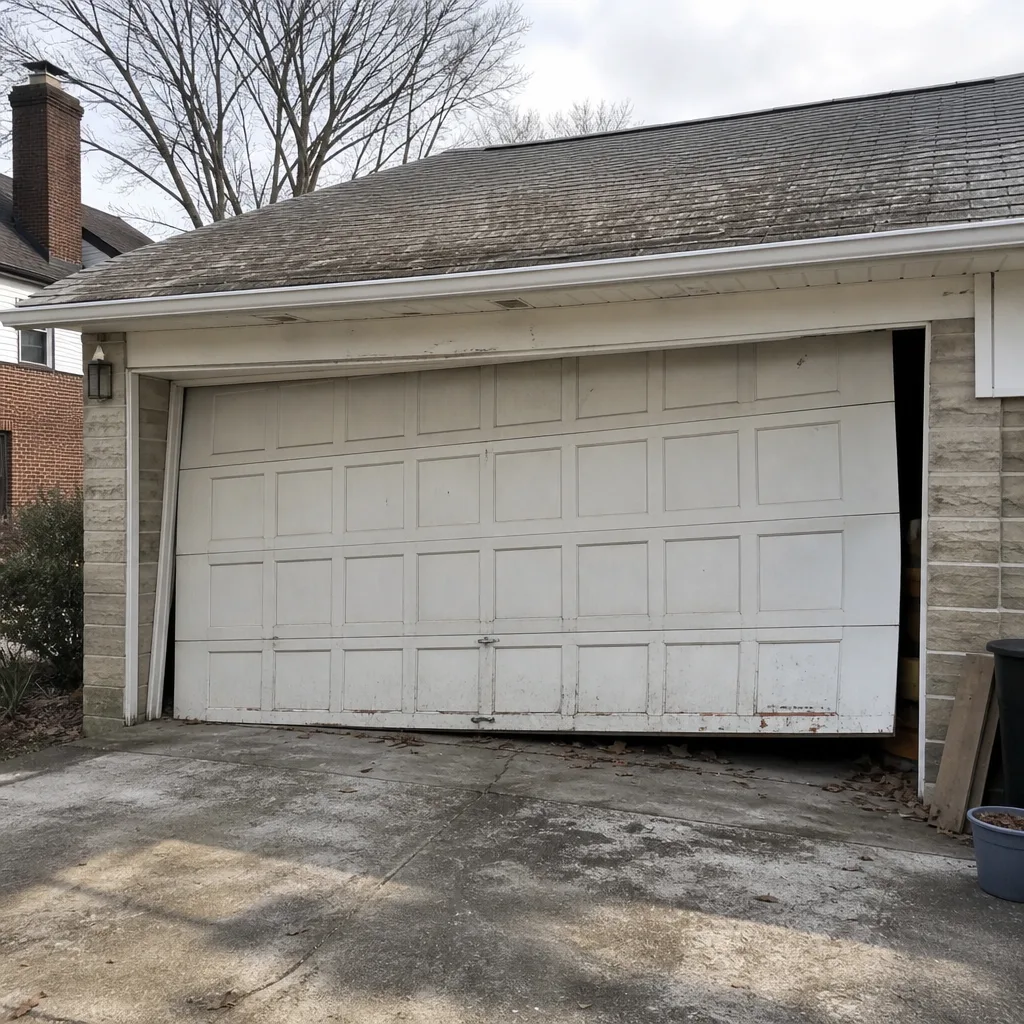 Before
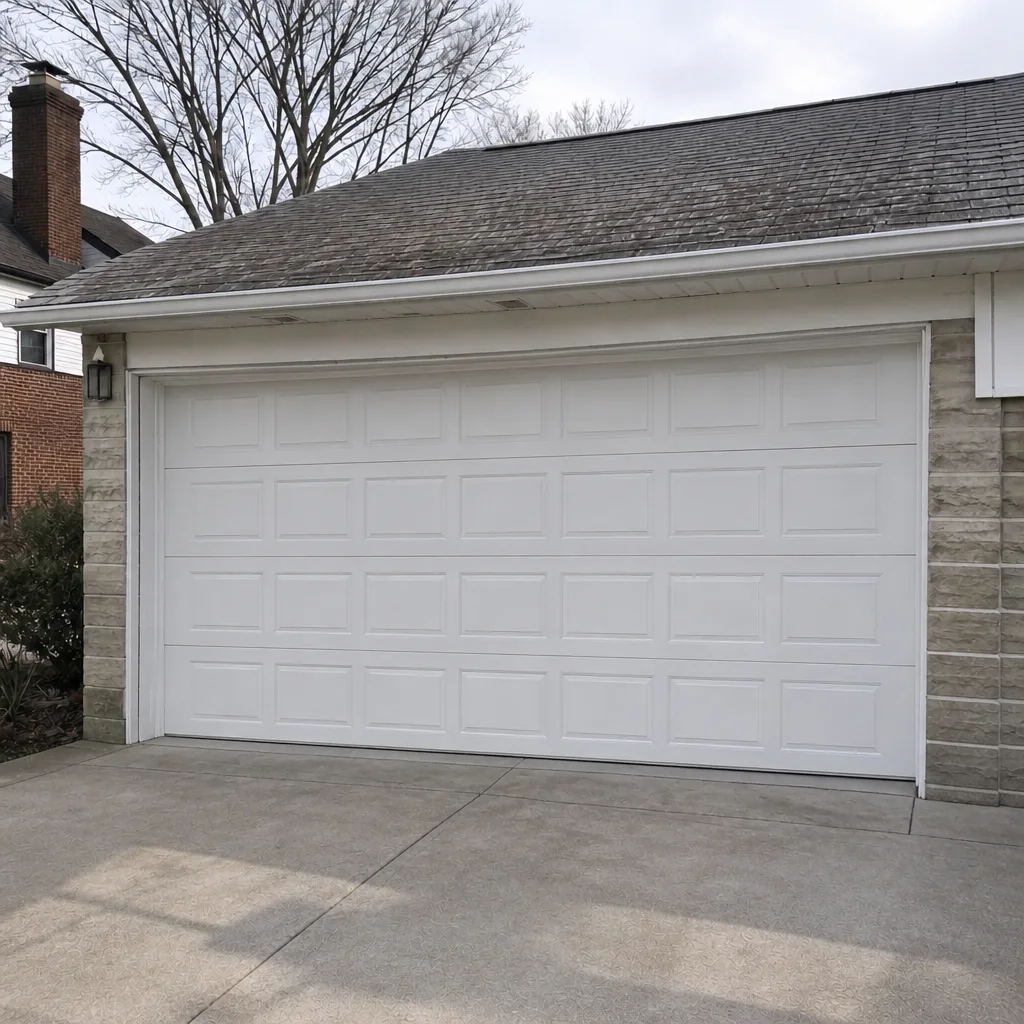 After
 Before
 After
 Before
 After
When to Call a Professional
Call a specialist when a spring has broken (a loud bang followed by a door that won’t lift), when the door is visibly off its track or crooked in the opening, when the opener runs but the door doesn’t move, when the safety reverse isn’t working, or when a new door or opener needs to be measured and ordered. Anchor problems – pulling out of brick, moving framing – are also a specialist job. Specific jobs on the door itself (springs, cables, torsion hardware, tracking realignment) are the ones that most commonly justify the call, and they’re the ones we routinely handle. For a small adjustment that doesn’t involve springs or cables, doing a few checks first is reasonable. If those checks don’t solve it, that’s the moment to call.
Garage Door Repair Shadyside offers free estimates in Shadyside – call (833) 345-5091 and we’ll walk through what’s happening with the door before we book anything.
Frequently Asked Questions
Spring repair in Shadyside typically costs $180 to $340 per spring, and because torsion springs are almost always replaced as a matched pair, plan on about twice that for the pair. The written estimate from the specialist sets the final price. Call (833) 345-5091 for an exact quote – estimates are free.
In most cases, yes, when the job is repair work – cable, roller, track, spring, or opener – and the parts on hand match what’s installed. Our technicians have up to 13 years of experience across LiftMaster, Chamberlain, Genie, Raynor and the other major brands, and parts for those brands are sourced locally so we can usually finish in one visit. New door installation and custom-width orders are measured and scheduled, not same-day. Call (833) 345-5091 and we’ll tell you what’s realistic for your garage.
No – the price is quoted and agreed before any work starts. The estimate you receive when the job is measured is the price for that scope of work. If we discover something during the job that genuinely changes the scope – soft framing, a bent track that wasn’t visible until the door was opened – we stop and talk through the new price with you before proceeding, and you decide whether to move forward.
Yes. The local professional we connect you with is licensed and insured to the standards their state requires, and works on garage doors as their single trade. We walk you through the specifics when you book.
Frequently, yes. Many garages in the neighborhood were built for cars from the 1920s through the 1950s, so the openings are often a little narrower or shorter than today’s standard, and a low-headroom ceiling rules out standard overhead hardware. That’s why every Shadyside job starts with an in-person measure rather than a catalog order.
Yes – a jackshaft-style opener mounts beside the torsion bar rather than hanging from the ceiling, so it doesn’t need overhead rail clearance. This is one of the most common opener upgrades we do in Shadyside’s small detached garages, and it lets you keep a full-size door in a shallow-ceiling space.
The Bottom Line
Garage door work in Shadyside is shaped by the neighborhood: older and often alley-access garages, narrow openings, shallow ceilings, and Pittsburgh’s freeze-thaw climate wearing out rollers, hinges, seals and springs faster than in drier places. The right approach starts with an in-person measure-up, which is what drives custom-width, low-headroom, and side-mount choices here. Repair is usually the smarter first move – unless the panels, track and framing are all near the end of their life, in which case a new door is the better use of the money. If a spring is broken or the door is off its track, treat it as a specialist job and keep the area clear. If the door is misbehaving or you’re weighing a replacement, the fastest way to a straight answer is a call.
Call (833) 345-5091 for a free estimate on any garage door work in Shadyside. We’ll measure the opening, talk through what fits your building, and quote the job in writing before any work starts.
Written by the team at Garage Door Repair Shadyside.