Last updated November 21, 2026
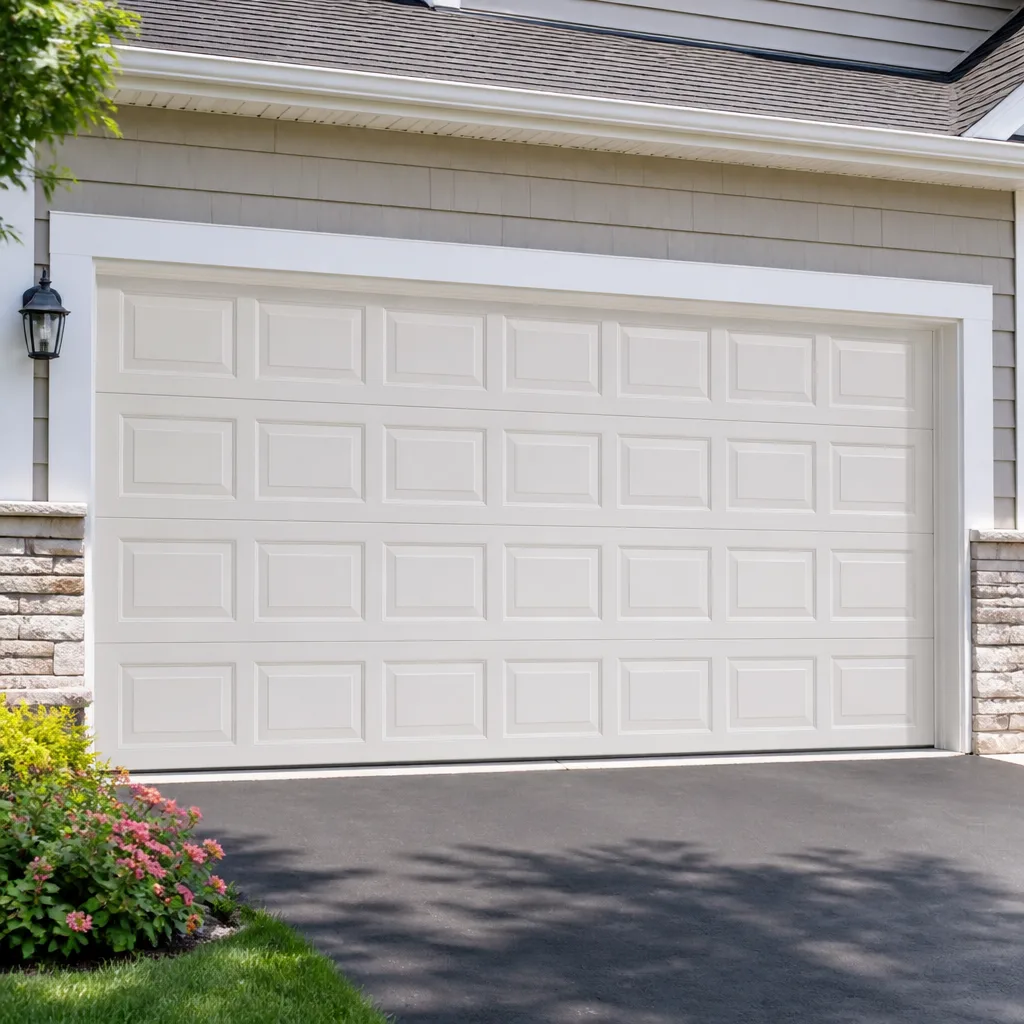 Raised-panel steel
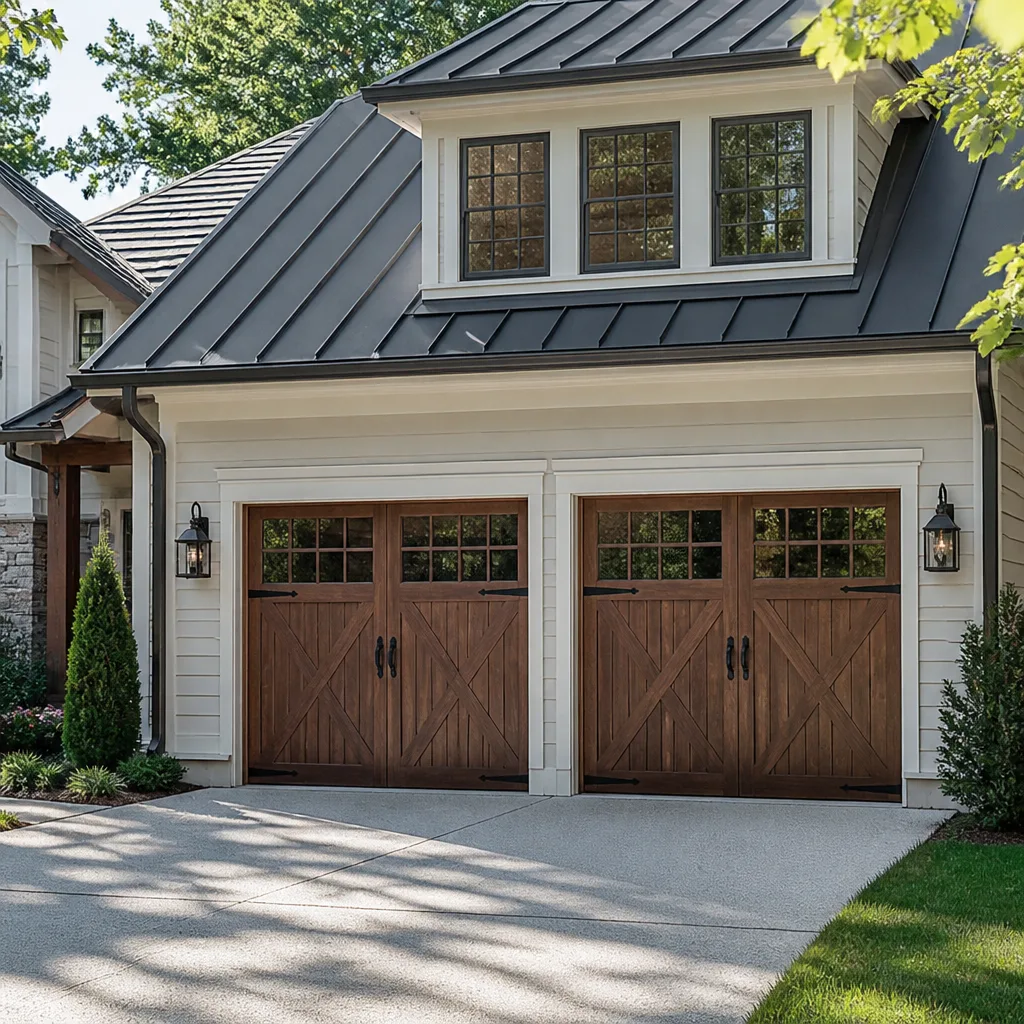 Carriage house
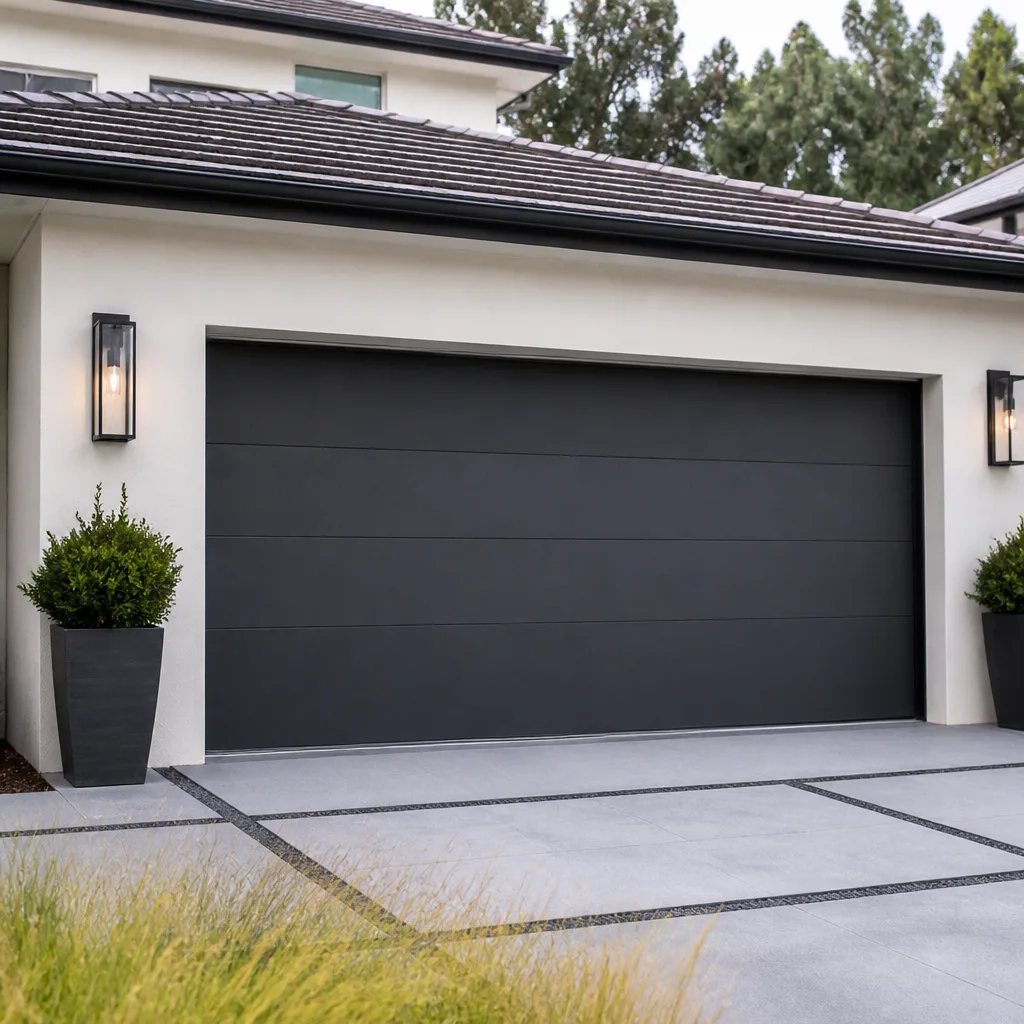 Modern flush
 Full-view glass
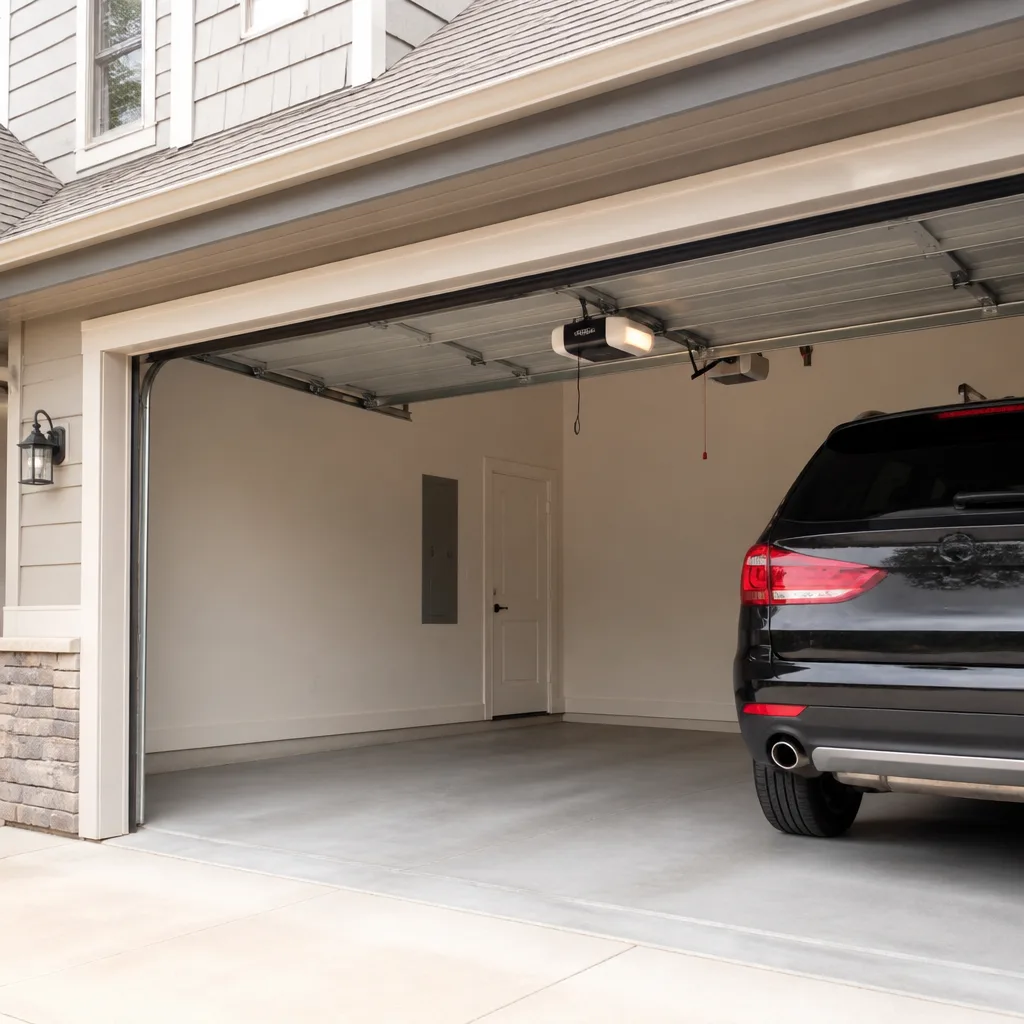 LiftMaster openers
 Chamberlain openers
Full 25-point door and opener safety check with every visit - springs, cables, rollers, tracks, and your LiftMaster or Chamberlain opener included
You get a price before we start. It does not change when the pro arrives.
Get your free estimateHow to Hire a Garage Door Contractor in Shadyside: A Step-by-Step Guide
You can find a garage door contractor in Shadyside in about ten minutes. Finding one who actually knows what they’re doing takes a framework, and that’s what almost nobody has. The tell is simple and it shows up before a quote ever changes hands: a contractor who starts talking numbers without measuring your headroom clearance hasn’t done the job enough times to know that clearance, spring size, and door weight decide everything. This guide walks you through the exact questions to ask, how to read a quote line by line, the red flags specific to garage door work, why brand authorization matters, and where a garage door specialist diverges from a general handyman shop. By the end you’ll have a checklist you can apply to any contractor in Shadyside before you let them touch your door.
Quick Answer
To hire a garage door contractor in Shadyside, ask three technical questions first (headroom clearance, spring size, opener drive type), demand a written quote that separates parts from labor, confirm the contractor is factory-authorized for your brand, and verify a physical business address. A qualified specialist will answer all four without hesitation. A generalist will stall, get vague about spring warranties, or refuse to break out parts and labor. The questions themselves sort the field faster than any review site.
Styles & brands we work with
- Raised-panel steel
- Carriage house
- Modern flush
- Full-view glass
- LiftMaster openers
- Chamberlain openers
Table of Contents
- The Three Technical Questions to Ask Before You Get a Quote
- Specialist vs. Handyman Shop: Why It Matters
- Why Brand Authorization Matters
- Red Flags Specific to Garage Door Work
- How to Read a Garage Door Quote Line by Line
- Shadyside Housing, Weather, and What It Means for Your Door
- Spring Repair and Liability: The Part Most Homeowners Skip
- Step-by-Step: Vetting a Contractor in Shadyside
The Three Technical Questions to Ask Before You Get a Quote
These three questions aren’t trivia. They’re diagnostic. Any contractor who works on garage doors regularly will answer them the way a mechanic talks about engine codes: fast, specific, and with a reason attached. Someone who’s only done a handful of doors will get quiet or pivot to “it depends.” Here’s what a qualified answer actually sounds like.
1. “What’s my headroom clearance?”
Headroom is the distance from the top of your door to the ceiling in the garage. It determines whether you can use a standard torsion spring setup or need a low-headroom configuration. A qualified contractor measures it before quoting. They may also ask about backroom (the depth from the door to the nearest obstruction) and side room (the distance from the door edge to the wall) because all three affect how the track, springs, and opener can be configured. A contractor who skips this step and quotes a flat price is guessing, and guesses get expensive after the door is already half-installed. In Shadyside’s older housing stock, garages were often built tight, so headroom matters more here than in a newer subdivision where every garage has a standard 12-inch clearance.
2. “What spring size does my door need?”
The answer isn’t a product name; it’s a calculation. Spring size depends on door weight, door height, and the lift cycle you want. A qualified contractor will either look up the wire gauge and inside diameter from the existing spring or measure the door’s weight before choosing a replacement. If you hear “we just put in a standard spring,” that’s a tell. A spring sized for the wrong door will fail early or strain your opener. Ask specifically: “How will you size the replacement spring?” The answer should include door weight and expected cycle life.
3. “What opener drive type do I have, and does it change the repair?”
Chain drive, belt drive, screw drive, and jackshaft openers fail in different ways and need different parts. A contractor who works across brands like Chamberlain and Genie will recognize the drive type on sight and tell you whether the failure is in the opener, the door’s balance, or the safety sensor. They’ll also ask whether you have a smart-home integration, because the electronics and remotes on modern openers are a distinct skill set from the mechanical work. If the contractor can’t tell a belt drive from a chain drive at a glance, they haven’t spent enough time under openers.
Specialist vs. Handyman Shop: Why It Matters
The difference isn’t about skill level in the abstract. It’s about tools, parts, and liability. A garage door specialist carries the winding bars, torsion tools, and spring stock that garage door work requires. A general handyman shop almost never does. That distinction shows up in concrete ways the moment the door comes apart.
Garage door work touches three areas where a generalist can get stuck:
- Torsion springs. They’re under extreme tension and require specific tools to wind and unwind safely. A handyman who’s watched a video once isn’t equipped to handle the stored energy correctly, and mistakes here are where serious injuries happen.
- Parts compatibility. A generalist who doesn’t stock garage door parts in the major brands will order something and come back a week later. A specialist with parts on hand for major brands aims to finish the job in a single visit, which is often the difference between a working door tonight and a door propped open on blocks until Friday.
- Warranty and liability. If a specialist installs a spring and it fails within the covered period, the warranty is clear. If a handyman installs a spring and it fails, you’re often dealing with a business that has no written spring warranty policy at all, no parts supplier relationship to fall back on, and no clear liability chain. That’s a real risk for the part of your door that holds the most stored energy.
A garage door specialist is a single-trade operation. Every tool and every technician is dedicated to doors and openers, not split across plumbing, drywall, and garage doors. When you hire through us, we connect you with independent local professionals who work on your brand, from opener remotes to full door replacement, and who carry the parts to finish the work rather than order it and reschedule.
For homeowners in Shadyside, the specialist question has a local edge. The neighborhood’s mix of older and renovated homes means door configurations vary widely, and a contractor who works in Shadyside regularly has seen the range. They know which garages were original to the house, which were added during a renovation, and what kind of door the space can actually accommodate. For a straightforward repair on a door that’s misbehaving, our garage door repair page breaks down the common failure points. For anything involving the opener itself, the electronics, drive systems, or smart-home integration fall under garage door opener repair, which is a genuinely different specialty from the mechanical door work.
Why Brand Authorization Matters
Brand authorization is the term for a manufacturer’s recognition that a business is qualified to sell, install, and service their products. It’s not the same as a reseller badge, and it matters for three reasons: warranty, parts access, and technical support. When you hire a contractor who isn’t authorized for your brand, you can sometimes get the work done, but the support behind that work is thinner than it looks.
Here’s what authorization actually unlocks:
- Manufacturer warranty coverage. Warranties on garage door components often specify that installation and service must be performed by an authorized party to remain valid. If a reseller installs a door or opener and something fails, warranty claims can be denied because the installation didn’t meet the manufacturer’s terms.
- Genuine parts access. Authorized contractors can source authentic parts for the brands they’re authorized on. Unlicensed resellers often use aftermarket or unknown-origin parts, which can cause fit issues or fail earlier.
- Technical support. When a repair goes sideways, an authorized contractor can call the manufacturer’s technical line and get an engineer on the phone. An unauthorized reseller can’t.
We’re factory-familiar with eight brands: LiftMaster, Chamberlain, Genie, Clopay, Amarr, Wayne Dalton, Craftsman, and Raynor. That means technicians work on whatever system is already installed in your Shadyside garage, no brand-switching pressure. When a homeowner’s door is a Clopay and their opener is a Chamberlain, the two systems are serviced together by someone who knows both. That’s a different experience than being told “we only work on X brand, so you’ll need to replace everything.” If the job is a full door replacement rather than a repair, the brand conversation shifts to door construction, insulation, and how the door will sit in your specific garage, which is the subject of garage door installation.
Red Flags Specific to Garage Door Work
Most “how to hire a contractor” advice is generic: check reviews, get three quotes, don’t pay in full upfront. Good advice, but it doesn’t catch what goes wrong specifically with garage door work. These seven red flags are the ones that matter here.
- Vague spring warranties. Ask exactly what the spring warranty covers and for how long. “We guarantee our springs” is not a warranty; it’s a slogan. A real warranty specifies the cycle count or period and whether the part, labor, or both are covered. A contractor who can’t tell you this hasn’t thought it through.
- Refusing to quote parts and labor separately. A written quote should break out the parts cost and labor cost for every line. Bundled pricing hides markup and makes it impossible to compare quotes. On a spring replacement, you want to see the spring cost and the labor cost as distinct items.
- No physical address. A contractor with a verifiable business address is investable in the community and accountable if something goes wrong. A phone number and a website alone isn’t enough, especially for a job that involves a component under that much tension.
- “Standard spring” without sizing. Springs come in different wire gauges and lengths. Any contractor who doesn’t ask about door weight or existing spring specs is guessing.
- Quoting before measuring. Headroom, backroom, and side room get measured before a quote is meaningful. If a number arrives before a tape measure, it’s not a quote; it’s a guess with a number on it.
- Pushing a full replacement when repair is viable. Sometimes replacement is the answer. But a contractor who jumps to “you need a new door” without walking you through the repair options first is trying to close a larger sale.
- No mention of safety inspection. A garage door has a safety reverse system, cables, rollers, and hinges. A repair that ignores the safety reverse system is an incomplete repair, and a contractor who doesn’t mention it isn’t thinking about the whole door.
There’s a Shadyside-specific angle to the address red flag. The neighborhood has homes across a range of eras and price points, and the garage door contractor market reflects that. A contractor whose entire business is a phone number and a parking-lot meeting point can disappear when a spring fails earlier than it should. A contractor with a real address and a real parts relationship is still there when you call back.
How to Read a Garage Door Quote Line by Line
A garage door quote is a short document, but the omissions hide in plain sight. The phrase “installation included” is the most common place to lose money, because what’s included is rarely everything. Here’s what a complete quote looks like, and what to check for on each line.
Parts line
Every part should be listed with a description and a price. For a spring replacement, that means the spring itself, sized and specified. For an opener repair, it might be the drive gear, the logic board, or the safety sensor. If the parts line says “misc. hardware” or “spring kit,” ask for an itemized list. You should be able to look up any part number and see what you’re paying for.
Labor line
Labor should be priced separately from parts, with a clear description of what the labor covers. Removing the old door, installing the new one, tensioning springs, aligning tracks, and testing the safety reverse are all labor, and they should be visible. A single “labor” figure is acceptable if the scope is written out beneath it.
Haul-away
Removing the old door, track, and hardware is a separate service with a real cost. “Installation included” often omits haul-away, which then appears as an add-on after the work is done. Confirm on paper whether haul-away is included and what the charge is if it isn’t.
Track hardware and opener wiring
New door installations frequently need new track, hinges, rollers, and the wiring that connects the opener to the safety sensors and wall button. Some quotes include this in the door price; some treat it as an add-on. Read the quote carefully for the phrase “existing track reused” or “wiring not included,” because either one means an additional cost later.
Permit
A permit may be required for a garage door replacement in Shadyside depending on the scope and the code in force. We can’t tell you from a website whether your specific job needs one; that’s a question for the city’s building department, and a qualified contractor will tell you the same. What matters for the quote is whether permit fees are listed. If they’re not mentioned, ask.
The estimate is the price
Once you have a written, itemized estimate and you agree to it, the written estimate sets the final price. That’s how it should work. If a quote leaves out haul-away, track hardware, or permit fees, ask before you sign. A contractor who won’t put the full scope in writing is telling you the final invoice will be a surprise.
When you’re ready for a written quote with the scope in writing, that’s the moment to call. The full breakdown of what we can do starts on our Garage Door Repair Shadyside page. If the job is a full replacement, the measurement and scheduling conversation is different from a repair, and it’s covered in the installation guide.
Shadyside Housing, Weather, and What It Means for Your Door
Garage doors in Shadyside age in specific ways because the neighborhood’s housing and its weather push on them in specific ways. You don’t need to know the science to hire well, but knowing what to look for helps you ask better questions.
Shadyside’s homes span a range of ages, and many garages were built or added during periods when door configurations differed from what’s standard now. That means headroom and side room vary more than in a newer subdivision. A door that was original to the house may have a spring setup that requires a specific replacement, and a contractor who works in Shadyside regularly will have seen the range. When you’re measuring, ask the contractor whether they’ve worked on a garage with this configuration before. The answer tells you whether the quote is informed by experience or by a template.
The local weather matters too, without needing a special climate story. Pittsburgh’s freeze-thaw cycles through winter and the summer humidity in this part of Pennsylvania work on the same components every year. Wood doors move with moisture and can warp enough to throw the door out of balance. Metal doors and their hardware expand and contract, which loosens hinges and rollers over time and puts extra load on the springs. A door that ran quietly in October can start grinding in February, and a door that seemed fine in spring can bind in July. Knowing this, a qualified contractor will check the door’s balance and hardware condition as part of any repair rather than just swapping the failed part. That’s a habit you want to confirm before you hire.
It’s also worth asking what condition the springs are in even when the problem seems opener-related. Springs and openers fail in similar ways from the homeowner’s perspective (the door won’t open, or it opens jerkily), and a contractor who checks both before quoting is one who’s seen the pattern. The details of garage door repair in Shadyside include this diagnostic step.
Spring Repair and Liability: The Part Most Homeowners Skip
Torsion springs hold the weight of your door and store energy to lift it. When one fails, it fails with force, and the repair involves working with that stored energy. That’s not a sales pitch for professional service; it’s the reason spring repair is one of the highest-risk services in the garage door trade and why it deserves its own set of questions during hiring.
Here’s what to ask any contractor who will touch your springs:
- “How do you size the replacement spring?” The answer should involve door weight and expected cycle life, not “standard spring.”
- “What’s your spring warranty, and does it cover labor?” A clear written warranty should specify the part and the period. Vague answers are a no-go.
- “How long do you expect this spring to last?” A qualified contractor will talk about cycle life in plain terms and connect it to how often your door opens each day.
- “Are there signs the cables or drums need attention too?” Springs, cables, and drums fail as a system. A contractor who only looks at the spring and not the rest of the assembly is doing half the job.
- “What happens if the spring fails after your service?” The answer should be a specific warranty process, not a promise.
Liability matters here in a way it doesn’t for a broken hinge. If a spring fails after a repair, the question of who’s responsible depends on who did the work and what they warranted. A specialist with a written spring warranty and a real business address is straightforward to hold accountable. A handyman with no written policy is a much harder conversation. This is the practical reason garage door specialists exist as a category: they do enough spring work to carry real warranty terms and the right insurance, and they know the difference between a door that’s safe to open after a repair and one that isn’t. When the spring is the problem, our spring repair service is built around that workflow. We recommend a trained professional for any spring, cable, or drum work, and we don’t publish DIY instructions for those parts because a mistake there can cause serious injury.
Step-by-Step: Vetting a Contractor in Shadyside
Here’s the sequence to run before you hire anyone. It works for a repair, an opener fix, or a full replacement, and it takes about twenty minutes of your time.
- Define the job in one sentence. “The door won’t open from the wall button” is different from “the door is out of balance” is different from “I need a new door.” The clearer your description, the faster a qualified contractor can tell you what’s involved.
- Call and ask the three technical questions. Headroom clearance, spring sizing, opener drive type. Note how the contractor answers. A qualified specialist answers without hesitation; a generalist stalls.
- Ask which brands they’re authorized for. If your door is Clopay and your opener is Chamberlain, a contractor authorized on both can handle the whole system. If they’re authorized on neither, ask how they’ll source parts.
- Confirm the business has a physical address. A verifiable address is a basic accountability check, and it separates a real business from a phone number.
- Request a written, itemized quote. Parts and labor separated. Haul-away, track hardware, and wiring spelled out. Permit fees addressed. The scope should match the job description you gave.
- Read the spring warranty, if it applies. Confirm what’s covered, for how long, and whether labor is included.
- Compare two or three quotes on scope, not just total. Two quotes can have the same bottom line and wildly different content. The one that omits haul-away and wiring isn’t cheaper; it’s just going to bill you later.
- When you’re ready, call and book the estimate. We work early mornings or Sundays, and we’re closed on Saturdays. A failed door on a Saturday can be booked for Sunday, so you’re not waiting through the whole weekend.
The sequence isn’t complicated, but it filters hard. Most of the contractors who get through it are the ones who do this work every day.
Common Mistakes to Avoid
- Hiring on price alone. The lowest quote is often the one with the most omissions. Compare scope and warranty, not just the number at the bottom.
- Not asking about spring sizing. Accepting “standard spring” without a sizing method is how you end up replacing a spring twice.
- Signing a quote with “installation included.” Ask what’s included. Haul-away, track hardware, and opener wiring are the usual missing pieces.
- Skipping the physical address check. In a neighborhood with this much renter traffic and turnover, a contractor without a real address is a risk you don’t need to take.
- Assuming any generalist can handle a spring. Spring repair is one of the highest-risk garage door services and requires specialized tools and training. Ask specifically about that experience.
- Overlooking the opener as a separate specialty. Opener electronics, drive systems, and smart-home integrations are a different skill set from mechanical door work. A contractor who’s strong on doors but vague on openers isn’t the right fit for both.
- Not listing every brand in the house. If your door and opener are different brands, the contractor needs to work on both. Ours are Clopay and Amarr doors, Chamberlain and Genie openers, and everything in between. Mention both brands when you call so the conversation starts in the right place.
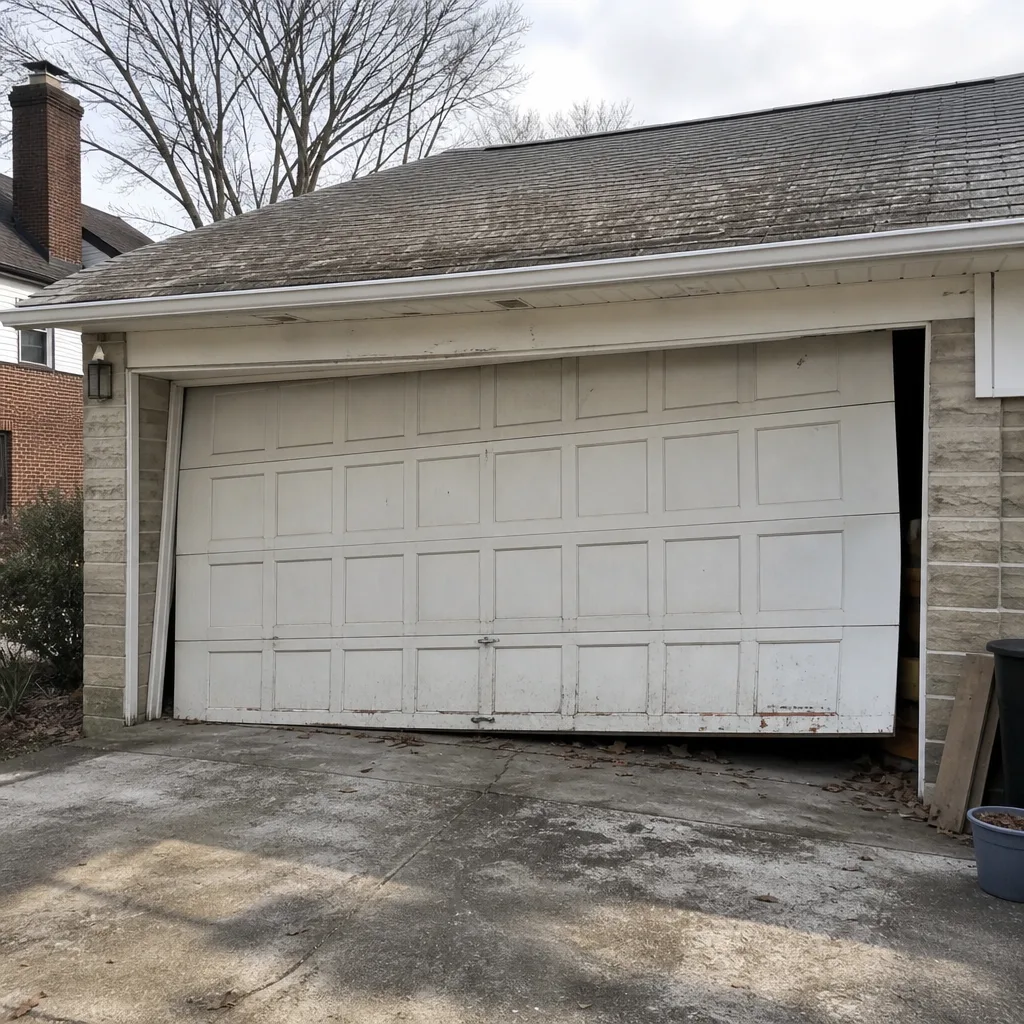
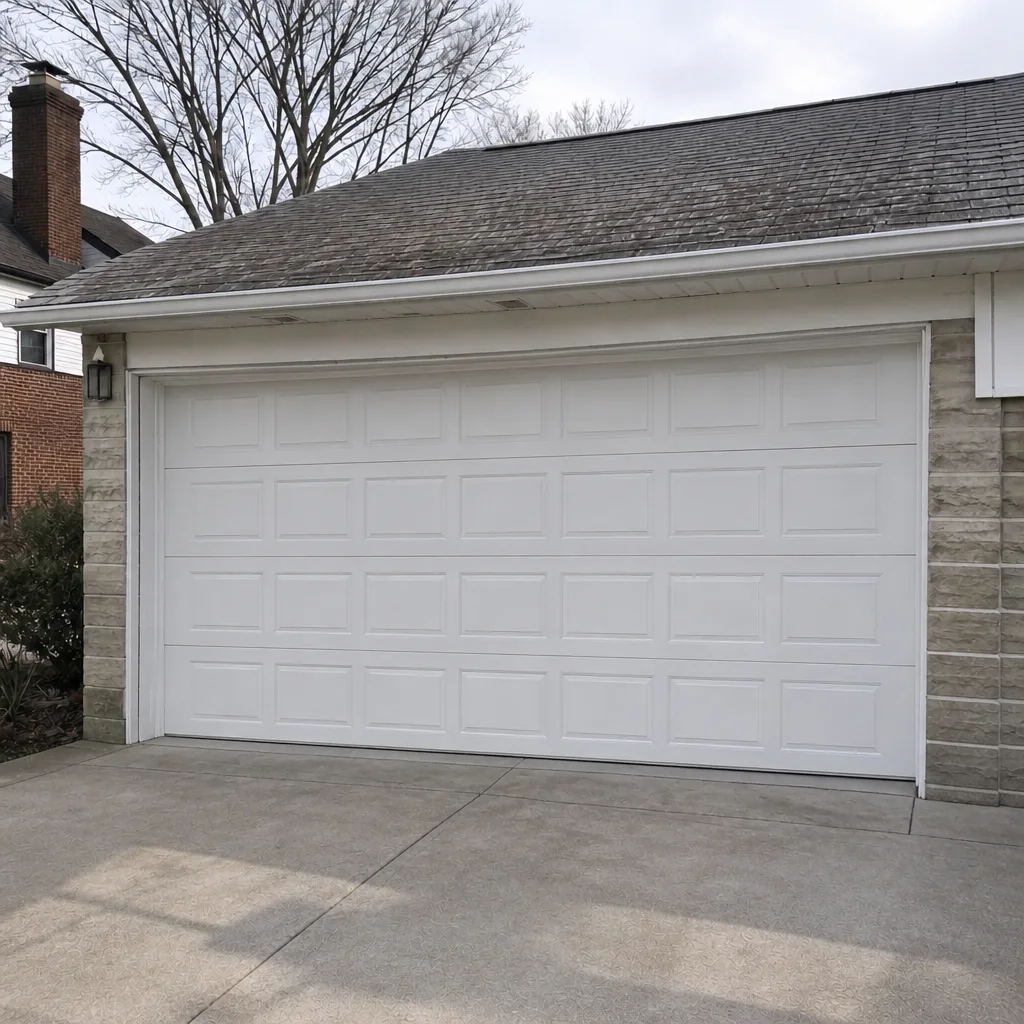
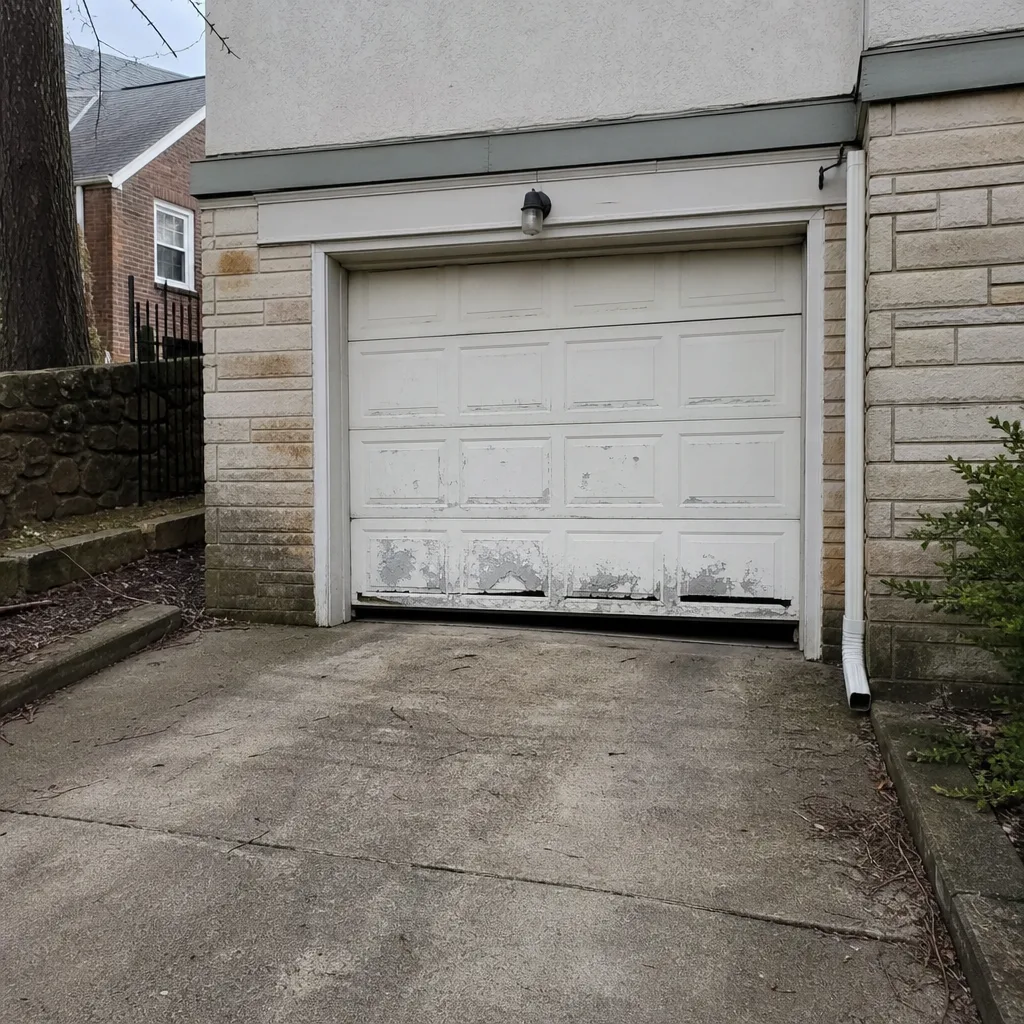
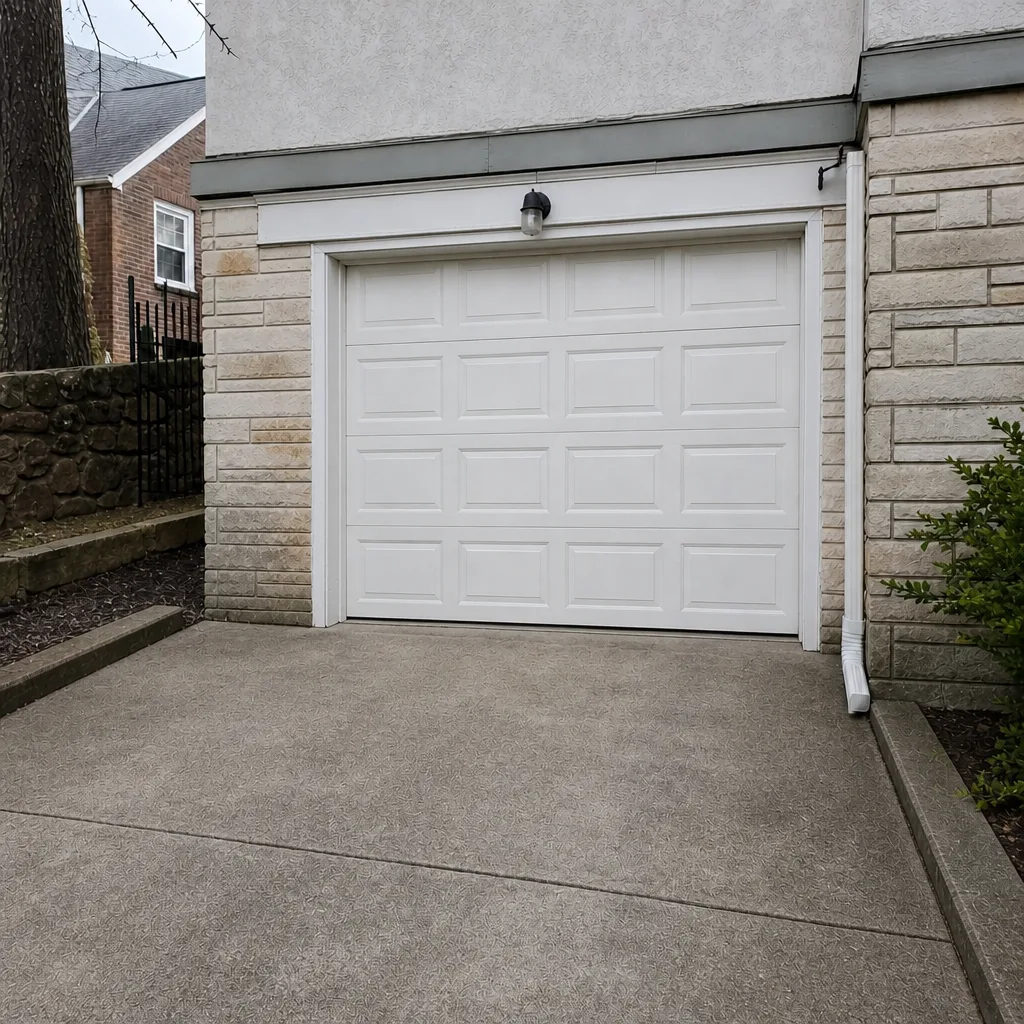
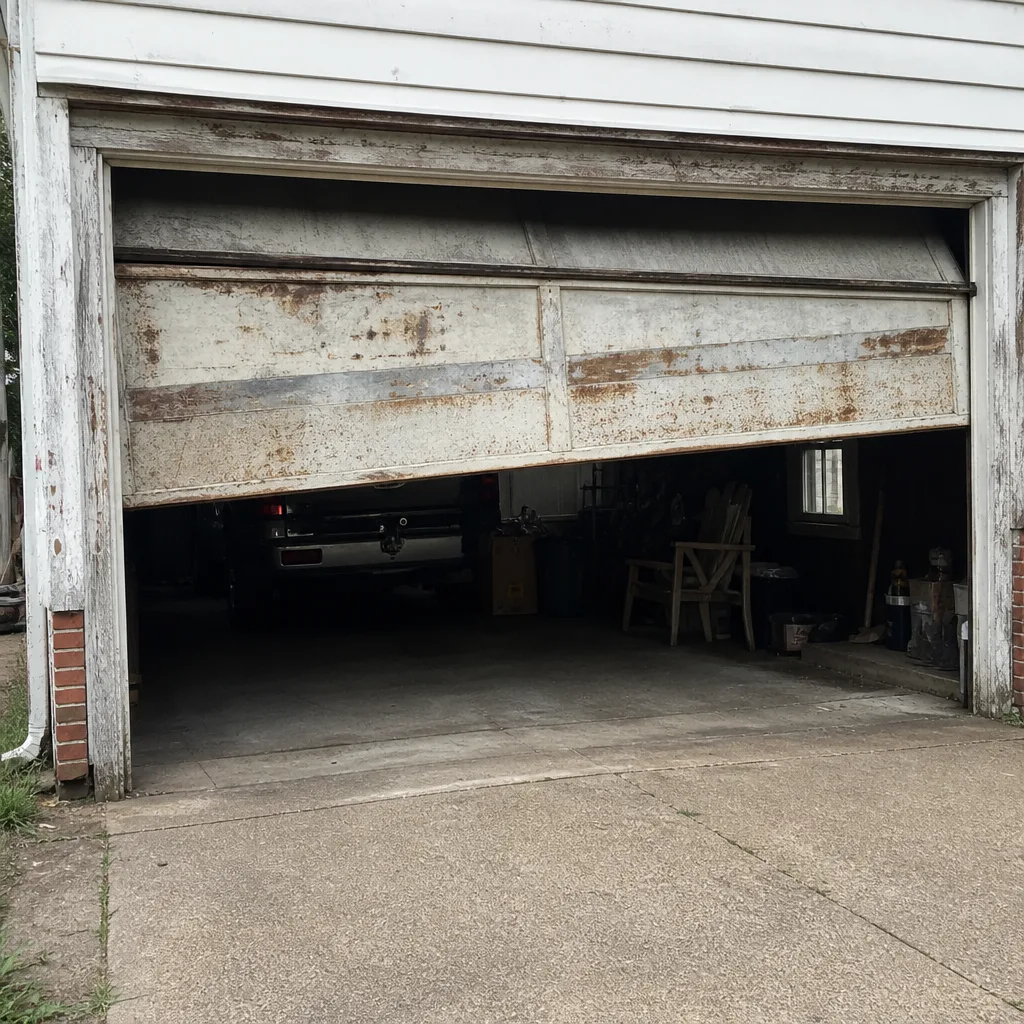
See the difference
 Before
 After
 Before
 After
 Before
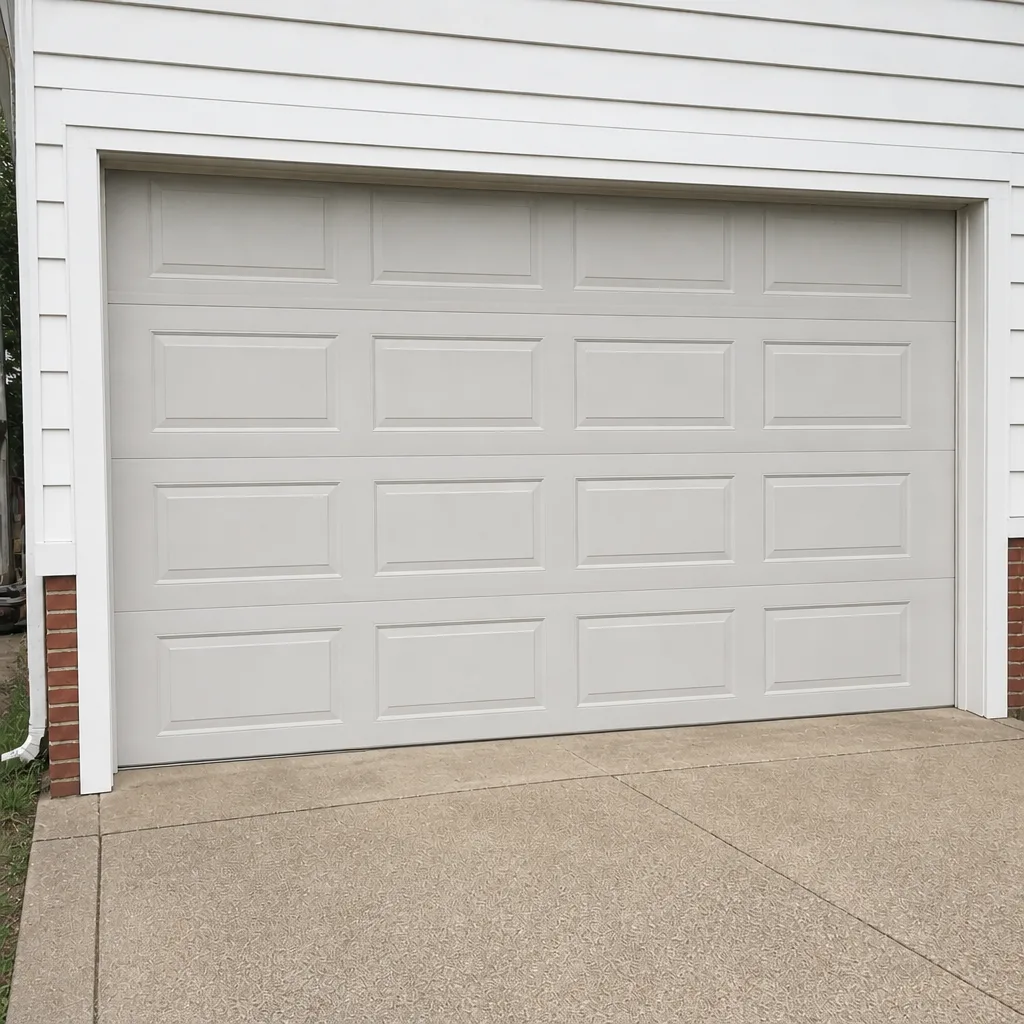 After
When to Call a Professional
Some garage door problems are genuinely waiting problems, like a remote that needs a new battery. Most aren’t. Call a professional when the door won’t open or close reliably, when you hear a loud snap and the door won’t lift, when the door is visibly crooked or off its tracks, or when the spring looks visibly broken. Call when the opener runs but the door doesn’t move, when the safety reverse system fails, or when the door is heavy to lift by hand. Call for any spring, cable, or drum work. Call for a full replacement when the door is warped, rusted, or beyond economical repair. Garage Door Repair Shadyside offers free estimates in Shadyside. Call (833) 345-5091 and we’ll book a time, confirm the scope, and quote the price before any work starts.
Frequently Asked Questions
Garage door repair in Shadyside typically runs from around $150 to $350 for a common fix like a broken spring, a misaligned track, or a faulty sensor, and opener repairs often sit in a similar range depending on the part. A full door replacement is a much larger job and is quoted per door based on size, construction, and hardware. Every price we quote is put in writing before any work starts, so the estimate you agree to is the final price. Call (833) 345-5091 for an exact quote; estimates are free.
Repairs and emergency work are usually the priority, and we aim to get out the same day when the schedule allows. We work early mornings or Sundays and we’re closed on Saturdays. If the door fails on a Saturday, call and we’ll book you for Sunday. Call (833) 345-5091 and we’ll tell you what’s available.
No, and here’s the framework that makes that true. We measure headroom, check the spring and hardware, and diagnose the opener before we quote. The written estimate reflects what the job actually needs, and once you agree to it, that estimate is the price. If we find something during the work that isn’t in the scope, we stop and talk to you before doing anything else. Call (833) 345-5091 and we’ll walk through the scope before you book.
The local pro who comes to your door is licensed and insured as their state requires. Garage door work is a single-trade specialty for us, and every technician and every tool is dedicated to doors and openers. Our technicians have up to 13 years of experience. Call (833) 345-5091 for an exact quote; estimates are free.
We work on equipment from LiftMaster, Chamberlain, Genie, Clopay, Amarr, Wayne Dalton, Craftsman, and Raynor. That covers the brands you’re most likely to find on a Shadyside garage, and it means we work on your brand rather than asking you to switch. When you call, mention both your door brand and your opener brand so we can confirm the right technician. Call (833) 345-5091 for an exact quote.
Permit requirements for garage door replacement depend on the scope of the job and the code currently in force, so the right source is your city’s building department. Ask them directly before you schedule; they’ll tell you whether your specific job needs one. A qualified contractor will tell you the same and will list any permit fees in the written quote. Call (833) 345-5091 if you’d like to talk through the scope first.
The Bottom Line
Hiring a garage door contractor in Shadyside is a vetting problem, not a search problem. You’ll find names easily. What takes effort is knowing which one to call back. The three technical questions sort the field fast. The brand authorization question tells you whether warranty and parts access will be there when you need them. The quote read tells you whether the written price is actually the final price. And the spring questions tell you whether the person handling the most dangerous part of the door knows what they’re doing. If a contractor clears all four, you’ve found a specialist. If any of them stall, you’ve saved yourself a problem. Call (833) 345-5091 for a free estimate and a written quote before any work starts.
Written by the team at Garage Door Repair Shadyside.