Last updated November 21, 2026
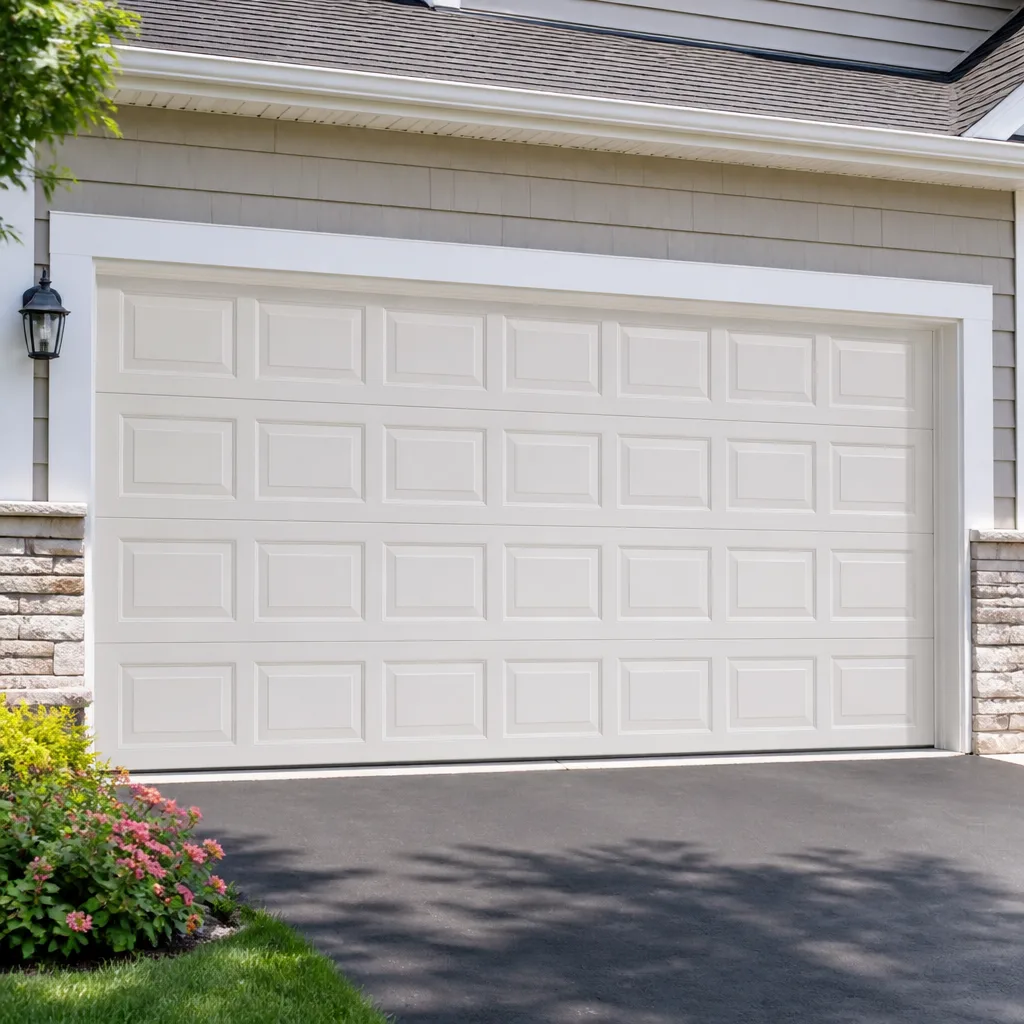 Raised-panel steel
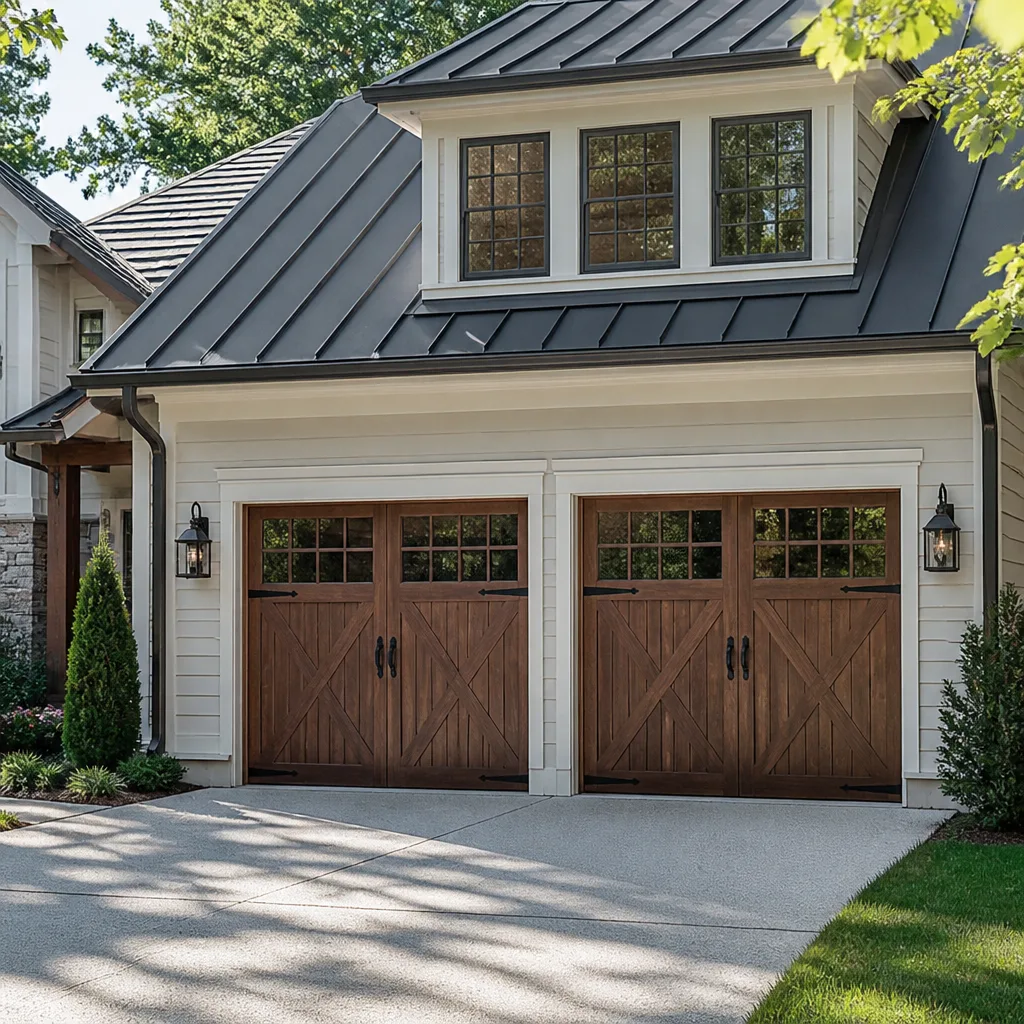 Carriage house
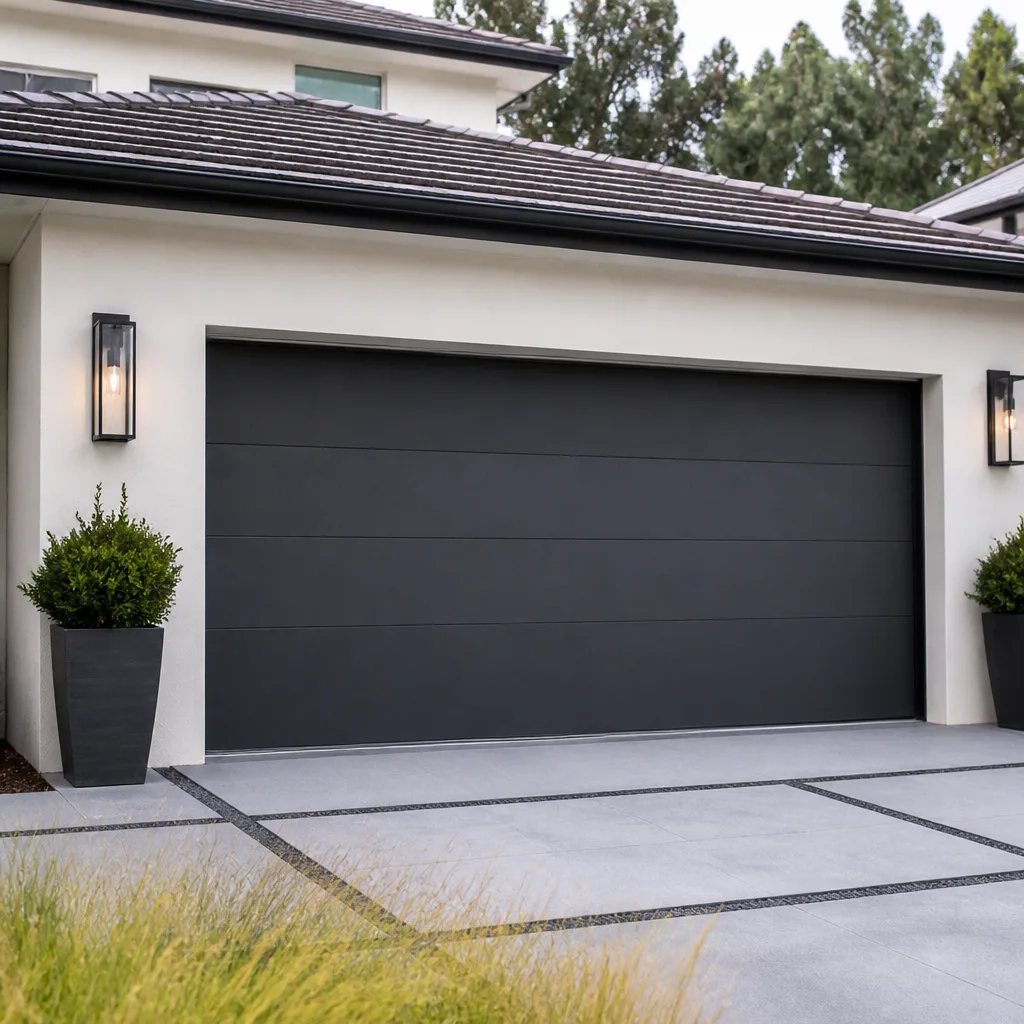 Modern flush
 Full-view glass
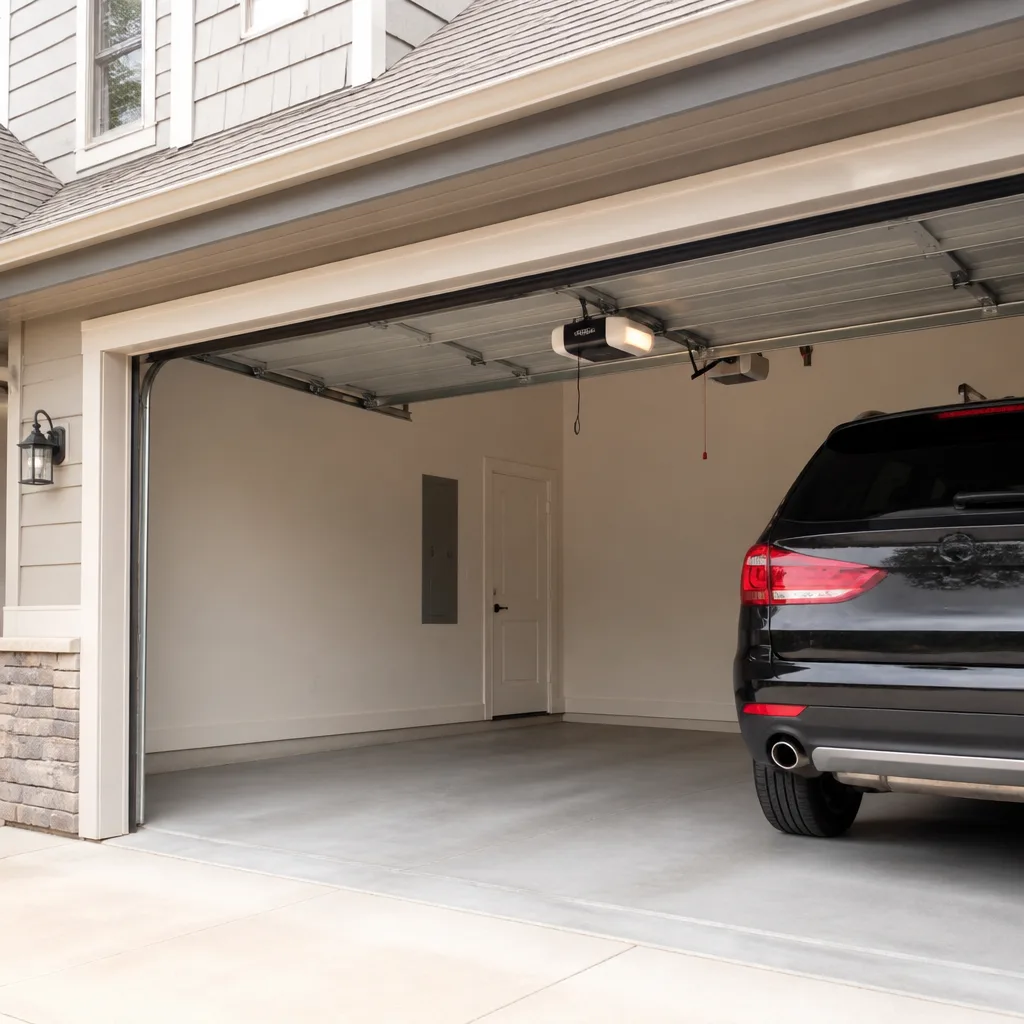 LiftMaster openers
 Chamberlain openers
Full 25-point door and opener safety check with every visit - springs, cables, rollers, tracks, and your LiftMaster or Chamberlain opener included
You get a price before we start. It does not change when the pro arrives.
Get your free estimateGarage Door Warning Signs: A Shadyside Homeowner’s Reference Guide
A door that hesitates for half a second before closing isn’t being slow. It’s telling you a spring is losing tension and has weeks, not months, left. That half-second pause is one of the most reliable early warnings in the whole garage door system, and almost nobody recognizes it for what it is. Most homeowners wait for something louder or more obvious: a bang, a crooked panel, a door that won’t budge. By then the cheap fix has usually become the expensive one.
This guide maps the sounds, movements, and visual cues a failing door gives off to the specific component producing them. You’ll learn which signs are safe to watch and which need same-day attention, and how to tell the difference. It’s written for Shadyside homeowners who want a straight answer about what their door is doing, whether that’s a fussy opener up near the Forbes Avenue end of the neighborhood or a tired spring on a century-old garage behind the shops on Walnut Street.
Quick Answer
The most important garage door warning signs are a door that pauses or hesitates before moving, a grinding or popping sound during travel, a visible gap in a torsion spring, frayed or kinked cables, and an opener that reverses without an obstruction. Cosmetic wobble and minor panel dents are usually safe to monitor. Hesitation, spring gaps, and cable fraying are not; those point to components under extreme tension and warrant same-day professional attention.
Styles & brands we work with
- Raised-panel steel
- Carriage house
- Modern flush
- Full-view glass
- LiftMaster openers
- Chamberlain openers
Table of Contents
- Why Does a Garage Door Warn You Before It Fails?
- What Do Common Garage Door Sounds Tell You?
- What Are the Visual Warning Signs Most Homeowners Miss?
- When Is It Safe to Monitor and When Do You Need Same-Day Service?
- What Your Opener’s Behavior Says About Its Hardware
- The Compounding Failure Pattern: How Small Signs Become Big Bills
- Seasonal Context for Shadyside Doors
- A Step-by-Step Monthly Inspection You Can Do Safely
Why Does a Garage Door Warn You Before It Fails?
Garage doors rarely fail without notice. The mechanism gives you warning during almost every cycle, and the reason is simple mechanics: a door is a balanced system, and any component that starts to degrade shifts load onto its neighbors. A torsion spring slowly loses tension, so the motor works harder, so the opener gear wears faster, so the door starts to hesitate. That chain of consequences takes weeks or months to play out. The warning signs exist at every link.
What most homeowners lack isn’t a warning. It’s a translation guide. A door makes dozens of small movements and sounds each time it travels, and distinguishing “normal operating noise” from “component about to fail” is experience you only collect by working on hundreds of doors. A garage door specialist recognizes the difference immediately. A homeowner usually doesn’t, which is why failures feel sudden even when they weren’t.
There’s a second reason the warnings go unnoticed in Shadyside. Older homes and their garages were often built when doors were lighter and openers were simpler. A typical garage behind a home near Ellsworth Avenue may have had an opener replaced once in its life while the original springs and tracks kept soldiering on. Those components age together, and the tiny cues they give off – a decimal point of extra travel on a return spring, a millisecond of delay – get mentally filed under “it’s always done that.”
The good news is that the earlier a symptom is identified, the cheaper and faster the repair. Our technicians have up to 13 years of experience, and the pattern they see most often is a homeowner calling with an emergency on a Tuesday when a phone call three weeks earlier would have caught the problem in the inspection stage.
Three components that warn you first
- Springs. The most heavily loaded part of the system. They lose tension gradually and announce it as a hesitation or a door that feels heavier than it used to.
- Cables. Under constant tension, they fray before they snap. Fraying shows as visible wear near the drums.
- The opener. The motor is the system’s messenger. A struggling opener tells you the door is no longer balanced, even when the door itself looks fine.
What Do Common Garage Door Sounds Tell You?
Every distinct sound a garage door makes comes from a specific component. If you can name the sound, you can narrow down the cause before you call.
Grinding
A grinding or gravelly sound during travel usually points to the opener’s drive system – worn gears inside the motor housing, or dry, unlubricated moving parts along the rail. If the grinding follows the door’s movement from one side, worn rollers or a dry torsion shaft are more likely. Grinding tends to escalate slowly, so it’s a monitor-and-schedule sign rather than an emergency, but left alone it often ends in opener failure.
Popping or snapping
A single loud pop, especially from the upper track area, is often a sign of a worn torsion or extension spring or a misaligned section shifting. If you hear a sharp snap and the door won’t stay up afterward, stop and call immediately. That pattern suggests a spring has broken. Spring repairs involve high-tension parts and should never be attempted without specialized training and tools. For that kind of failure, you’ll want garage door repair handled by a specialist right away.
Scraping or squealing
Scraping usually comes from the rollers or the hinges where sections meet. A door that scraping the track usually has a bent track edge from a minor impact. Squealing that rises with door speed points to dry rollers or a dry torsion shaft. Both can progress to a jammed door if left several months, but neither is an emergency on day one.
Rattling or a low growl
A rattle that has always been present is usually normal. A rattle that showed up recently, especially from the ceiling-mounted opener unit, points to a loose mounting bracket or failing opener bearing. This is a monitor sign unless it’s accompanied by hesitation or reversal.
Your garage door noise-to-cause map
- Grinding, all cycle: opener gear wear or dry moving parts in the drive assembly.
- Grinding, one side: worn rollers or a dry torsion shaft.
- Single loud pop or snap: spring failure or section shift. High priority.
- Scraping: bent track edge or misaligned hinge.
- Rising squeal: dry rollers or dry torsion shaft.
- New rattle from the ceiling unit: loose opener bracket or failed bearing.
What Are the Visual Warning Signs Most Homeowners Miss?
Sounds draw attention. Visual signals rarely do, because they develop in the corners and edges of a door that nobody looks at directly. These are the ones worth a two-minute walk into the garage.
The spring gap
On a torsion spring – the one mounted horizontally across the header above the door – a visible gap of an inch or two in the coil means the spring has broken. It happened at that point in the coil. A broken torsion spring can release tension suddenly, so don’t try to open the door by hand or with the opener. Call a professional. If you have an extension spring system – two springs running alongside the track – look for a stretched, gapped, or dangling spring. A dangling spring means one has failed and the other is carrying the full load, which typically puts it next to failure too.
Cable fraying patterns
Cables run from the bottom corners of the door up to the drums at the top. Fraying normally starts near the drum where the cable winds and unwinds hundreds of times a year. Look for visible individual wire strands standing away from the rest, kinked sections, or rust streaks that suggest corrosion. A visibly frayed cable crossing the tray at odd angles is the classic pre-snap signature. In Shadyside’s wet winters and humid summers, cables and spring coils collect moisture that accelerates the wear. Cable work is a spring-load bearing job and not something worth doing yourself.
Track deformation at stress points
Look at the vertical track near the floor and at the curve where the vertical meets the horizontal. Most track trouble shows up at the bottom: bowed track, a widened gap opening between track and door edge, or a hand-curved corner left there by an old impact. A slight bow is often monitorable. A visible bend at a stress point calls for an inspection because the rollers start to drag and the opener’s force is redirected into the door frame.
Panel and hardware checks most people skip
- Panel gaps between sections. Daylight visible between sections suggests a hinge loosening or a bent track.
- Hinge screws that back out. A hinge with one screw missing is usually a two-minute tightening. Multiple hinges failing points to shifted alignment.
- Weatherstripping tears. Torn bottom seals in Shadyside’s wet seasons let water pool under the panel and can freeze in a cold snap, putting pressure on the next section up.
- Rust spots. Small orange streaks on springs or hinges point to moisture getting in. Not urgent, but worth noting in the inspection list.
When Is It Safe to Monitor and When Do You Need Same-Day Service?
The clearest way to separate “watch this” from “call now” is by asking one question: does the symptom involve a component under stored tension, or one that holds a section in the air? Tension parts (springs, cables, drums) and load parts (tracks, hinges under pressure) get immediate attention. Friction parts (rollers, bearings, weatherstripping) can wait for a scheduled appointment.
Same-day service signs – call today
- A loud bang followed by a door that won’t lift. That is likely a broken torsion or extension spring. Don’t cycle the door with the opener. Call and get a same-day appointment.
- A visibly broken or gapped spring. Spring tension cannot be released safely by hand.
- A door that reverses on closing with the path clear. Could be the safety sensor, but when the sensors are clean and aligned, the opener’s force or limit settings are usually the culprit. Get it checked the same day, before it reverses on a car, pet, or person.
- A visibly frayed or kinked cable. Cables take the door’s full weight if the spring fails. A damaged cable on one side can cause the door to hang at an angle and drop.
- Door hanging crookedly on both sides. If one side is visibly higher or lower than the other, one spring or cable is carrying uneven load.
- A broken opener that leaves the door stuck open. Not technically a hazard, but the door sitting open invites a security problem. Same-day repair matters.
Safe to monitor signs – schedule within a few weeks
- Grinding from the opener that’s been getting louder over a month.
- Squealing or squeaking during travel.
- Rollers that look visibly worn but still track smoothly.
- A rattle from the ceiling unit that showed up recently.
- Weatherstripping that’s dry or torn but not yet affecting the seal.
What “monitor” actually means
Monitoring is not ignoring. Note the day you noticed it. Then walk out to the door once a week and watch a full open and close cycle. If the symptom holds steady for several weeks, schedule a repair at your convenience. If the symptom gets worse – louder, longer, or more frequent – move it to same-day. Hesitation is the classic example: a half-second pause that becomes a full second over a month is telling you the spring is losing tension and will break.
What Your Opener’s Behavior Says About Its Hardware
Openers tell you more about the door than most homeowners realize. When an opener behaves oddly, the first thing to establish is whether the problem is in the opener or in the door’s balance. That’s because openers are designed to lift a balanced door. When the balance degrades, the motor struggles in ways that look like software glitches. They almost never are.
Hesitation before movement
A door that pauses briefly when you press the remote, then moves, is often showing you that the opener is calculating force before it commits. On a balanced door, that pause is near zero. On a door with a weakening spring or a sticky hinge, the opener “double-checks” because it’s sensing more resistance than expected. Hesitation is a hardware warning sign about the door, not the remote.
Reversal without obstruction
Every modern opener reverses when something is in the door’s path. If the path is clear and the door still reverses on closing, there are three likely causes, and none are software glitches:
- Safety sensor misalignment. Cheap to check first; look for a cut wire, a knocked sensor, or a spiderweb across the lens.
- Force setting drifted too low. This happens over time as the door’s friction changes. A technician resets it, but the friction change itself is worth investigating.
- Actual binding in the track. The opener is halting because the door hit resistance it read as an obstruction. Binding usually comes from a bent track or a worn hinge.
Remote lag and slow response
When a remote starts needing to be pressed twice to open, or the door responds slowly, the fix is often in the opener’s receiver board, a weak battery in the remote, or interference from a recent change around the house. Occasionally the opener’s control board itself is aging. A garage door opener repair visit can test the signal chain properly. We work on garage door opener repair as its own specialty because the electronics, drive systems, and smart-home integrations differ a lot between LiftMaster, Chamberlain, Genie, and Craftsman systems.
Partial cycles
A door that stops halfway up or halfway down is a classic opener hardware tell. It usually means the opener is hitting its safe force limit – which happens because the door’s weight feels heavier than it should. That heavier feeling points back to a spring losing tension or a door binding on the track. The opener is doing what it’s designed to do: refusing to overwork itself.
Lights blinking in a pattern
Most brands blink the opener’s built-in light in a diagnostic pattern when something fails. A technician can read those codes in seconds. If you’re away from home and the opener blinks every time you press the button, note the pattern before you call.
The Compounding Failure Pattern: How Small Signs Become Big Bills
Most expensive garage door failures aren’t single events. They’re a chain of small, ignored signals, each one loading more stress onto the next component. Understanding the chain is the strongest argument for acting on early signs.
The chain in detail
- Week 1-4: A cable starts to fray at the drum. Visually, it’s a few strands. The door operates normally.
- Week 4-8: The frayed strands stress one side of the torsion spring unevenly. The spring begins to lose tension on that side.
- Week 8-12: The door opens slightly crooked, and the opener compensates by increasing force. The door hesitates when it starts.
- Week 12-16: The spring breaks. When it does, the door’s full weight drops to the cable – which is already frayed.
- The failure moment: The cable snaps. The door comes down hard, twisting the tracks and bending the panel sections that hit first.
- The bill: What was a cable replacement is now a cable, spring, track, and at least one panel replacement. Often an entire door section gets replaced.
Why the pattern accelerates in winter
Cold snaps shorten the life of aging metal. Springs that were already losing tension can fail faster in a Shadyside January. Cables that were frayed from spring cycling become brittle with the cold. If you walk into your garage and hear a new squeak or feel a new hesitation on a cold morning, treat it as a leading indicator, not a coincidence. Getting a spring checked before the worst cold arrives is usually the difference between one repair and a chain of them.
Why panels rarely survive a fall
Door sections in a steel Clopay or Amarr and lighter aluminum Amarr models have a specific design window for their weight. When a door falls because a cable or spring broke, the panels usually hit the concrete floor or slam into their own tracks with more force than they were engineered to absorb. A panel that looks fine may have a hidden bend in the rail that no longer aligns with its neighbors. That’s why a “simple” spring break sometimes turns into a panel replacement and a track realignment at the same time. We see the same compounding pattern with garage door installation jobs: much of the work is repairing the damage a small symptom left behind.
Seasonal Context for Shadyside Doors
Shadyside’s climate gives garage doors a specific seasonal rhythm, and knowing it helps you know when to inspect more carefully. Winters swing between freezing nights and above-freezing afternoons. Those cycles are hard on the metal parts of a door because they cause expansion and contraction in the springs, tracks, and cables. The first cold snap of the season is when tension loss shows up most clearly. If your door acted fine all summer, hesitates in the first week of November, and feels normal again by the second week, that’s cold-sensitive spring tension, and it’s worth a call.
Summers bring humidity, and humidity is bad for exposed steel. Springs, cables, and hinges pick up surface rust fastest in a hot, wet stretch. Garage doors facing morning sun hold moisture longer because they don’t dry as fast as doors in shade. If your door is on a south- or east-facing wall and shows rust at the hinges, clean-and-lube maintenance is a simple win.
What a Shadyside door inspection should check in each season
- Spring and fall: Full spring inspection, cable check, and balance test.
- Winter: Watch for hesitation, cracking sounds, and a door that grows stiff as temperatures fall.
- Summer: Check rust spots on hinges and spring coils, and listen for new squealing.
- After heavy rain: Check for water pooling under the bottom seal and inspect for weatherstripping damage.
Between Forbes and Fifth avenues, many homes have garages tucked away behind the main building rather than facing the street. Those tucked-away garages get less daily use and, as a result, fewer eyeballs on developing problems. If the door is at the back of the property and you only use it a few times a week, an occasional walk into the garage is more valuable than anything else you can do.
A Step-by-Step Monthly Inspection You Can Do Safely
A monthly five-minute check catches almost everything this guide describes. Work through it in this order. Anything you find on the same-day list goes to a professional before the next cycle.
- From outside the closed door. Look for any gap between the door and the frame, weatherstripping tears, and sunlight sneaking between panels.
- From inside, door closed. Look at the torsion spring or extension springs. Check for visible gaps, dangling springs, or heavy rust.
- Cables. Look at both sides near the drums. Check for fraying, kinks, or rust streaks.
- Tracks. Scan the verticals, the curves, and the horizontals for bowing or bends.
- Hinges and rollers. Check that hinges are tight and rollers turn freely. Replace any roller that wobbles.
- Balance test with the door disengaged. Pull the opener’s manual release, lift the door about halfway by hand, and let go. A balanced door stays put. A door that drops means the spring has lost tension.
- Opener test. Reengage the door and run one full open and close cycle. Listen for new sounds, watch for hesitation, and confirm the door reverses when you pass an object under it.
- Safety sensors. Wipe both sensor lenses. Look for a knocked or misaligned sensor. Confirm the opener’s status light shows alignment.
What not to do during the inspection
Do not adjust springs, cables, or drums. Those components are under enough tension to cause serious injury. Do not stand under the door while running the opener. Do not try to “test” a spring gap or force a door with a broken spring to close. If you see a spring gap, close the door only if it’s already safely down; otherwise call a professional. Our technicians have up to 13 years of experience precisely because these components deserve specialist handling.
If the door is genuinely old – say, a Wayne Dalton or a Craftsman opener that’s been through many cycles over a decade or two – a full professional inspection once a year catches things no homeowner can practically see. Age itself isn’t automatically a reason to replace hardware, but it is a reason to look.
Common Mistakes to Avoid
- Treating a half-second hesitation as normal. It isn’t. A door that hesitates is showing you a spring losing tension. Waiting often ends in a broken spring within weeks. Call now.
- Cycling a door with a broken spring. If the spring has snapped, running the opener on the door puts the full weight of the door on the opener’s internal parts. That turns a spring repair into a spring and opener repair.
- Ignoring a frayed cable because “it still opens.” A frayed cable is the most dangerous kind of warning sign because the door looks fine right up to the moment the cable snaps. Frayed cables are a same-day item.
- Confusing cosmetic noise with real noise. A door that has rattled since the day you moved in is likely fine. A new rattle from a door that was silent six weeks ago is a sign of a loose bracket or aging opener. The change matters more than the sound.
- Assuming a reversing opener is a phone app problem. Smart-home integrations on modern LiftMaster and Chamberlain openers are rarely the cause. The opener reverses because a hardware limit is being triggered, and the hardware limit is doing its job.
- Skipping the monthly balance test. It takes a minute and catches the majority of early spring failures. Most homeowners never do it.
- Not touching the door for months. Some Shadyside garages behind older homes are accessed a few times a week. A door that no one looks at closely can develop cable fraying and spring gaps that no one sees until a failure.
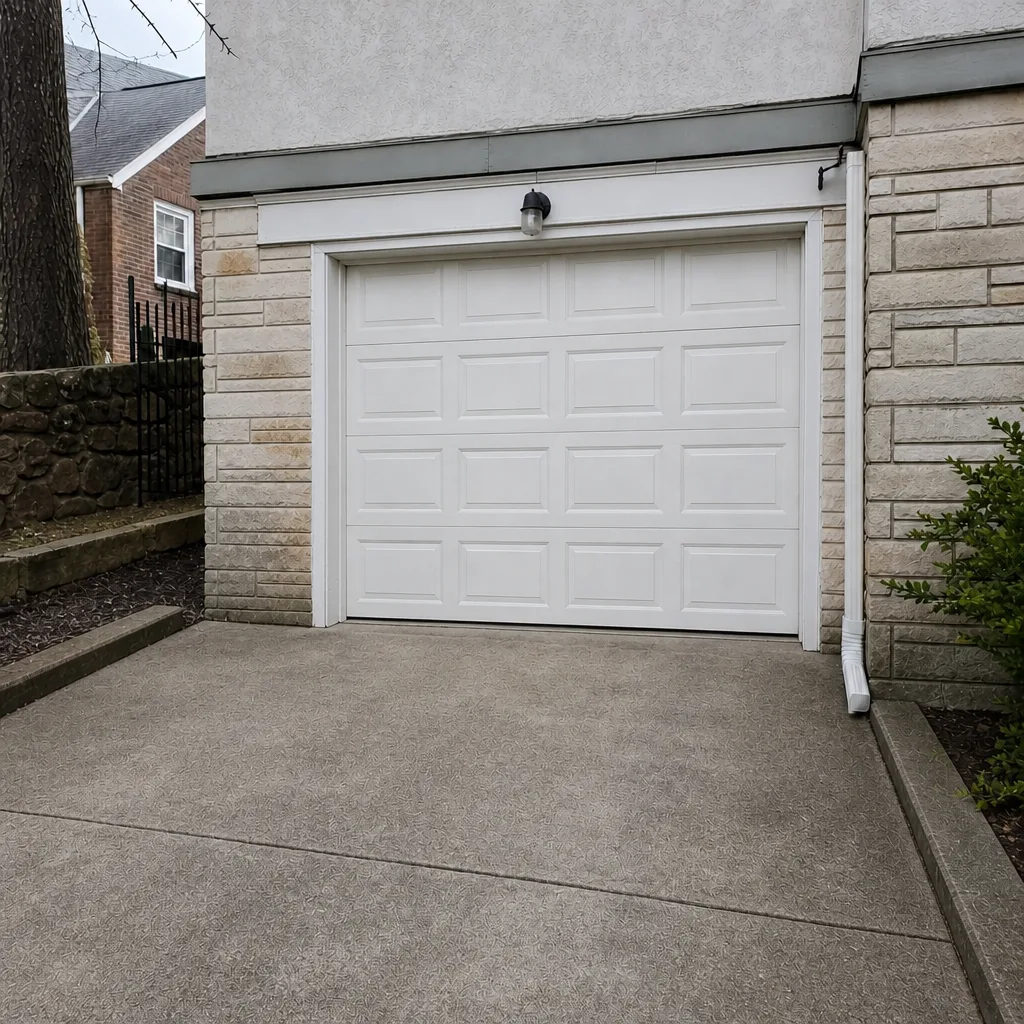
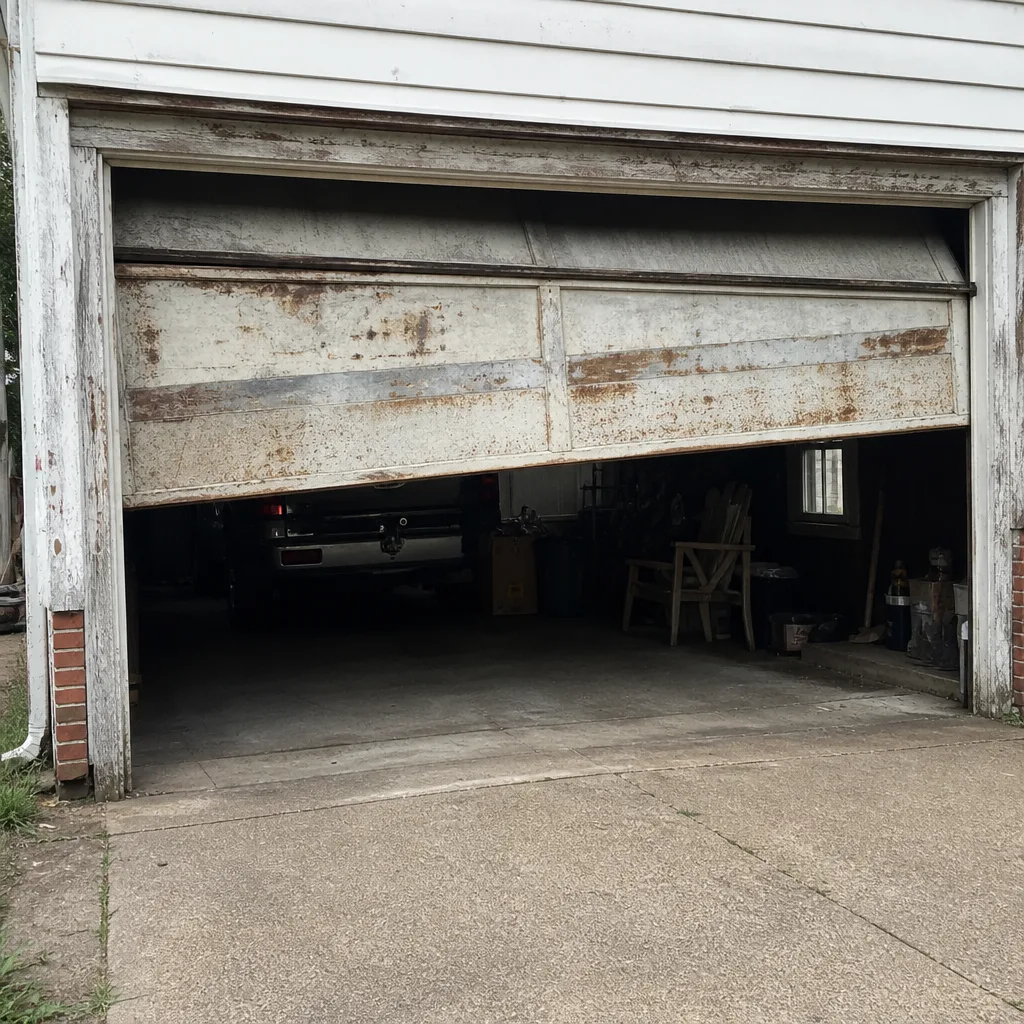
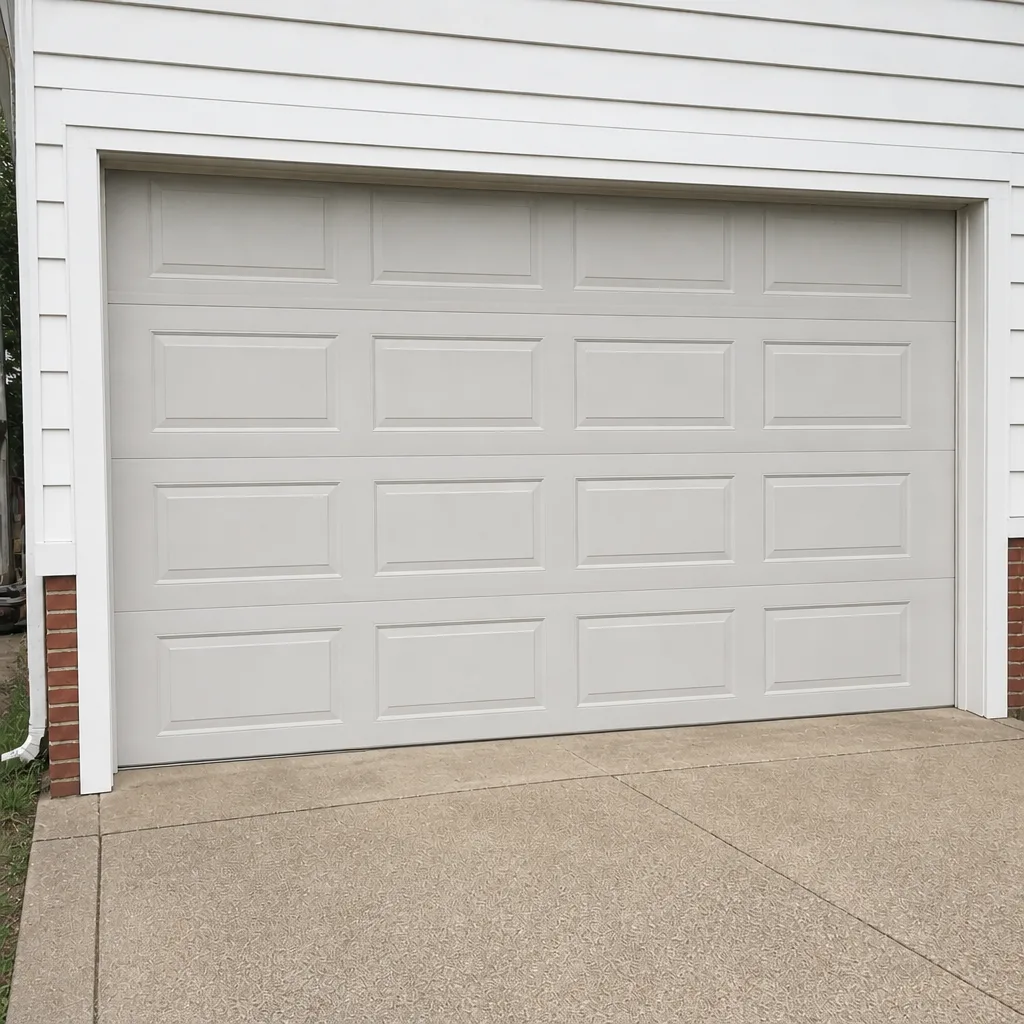
See the difference
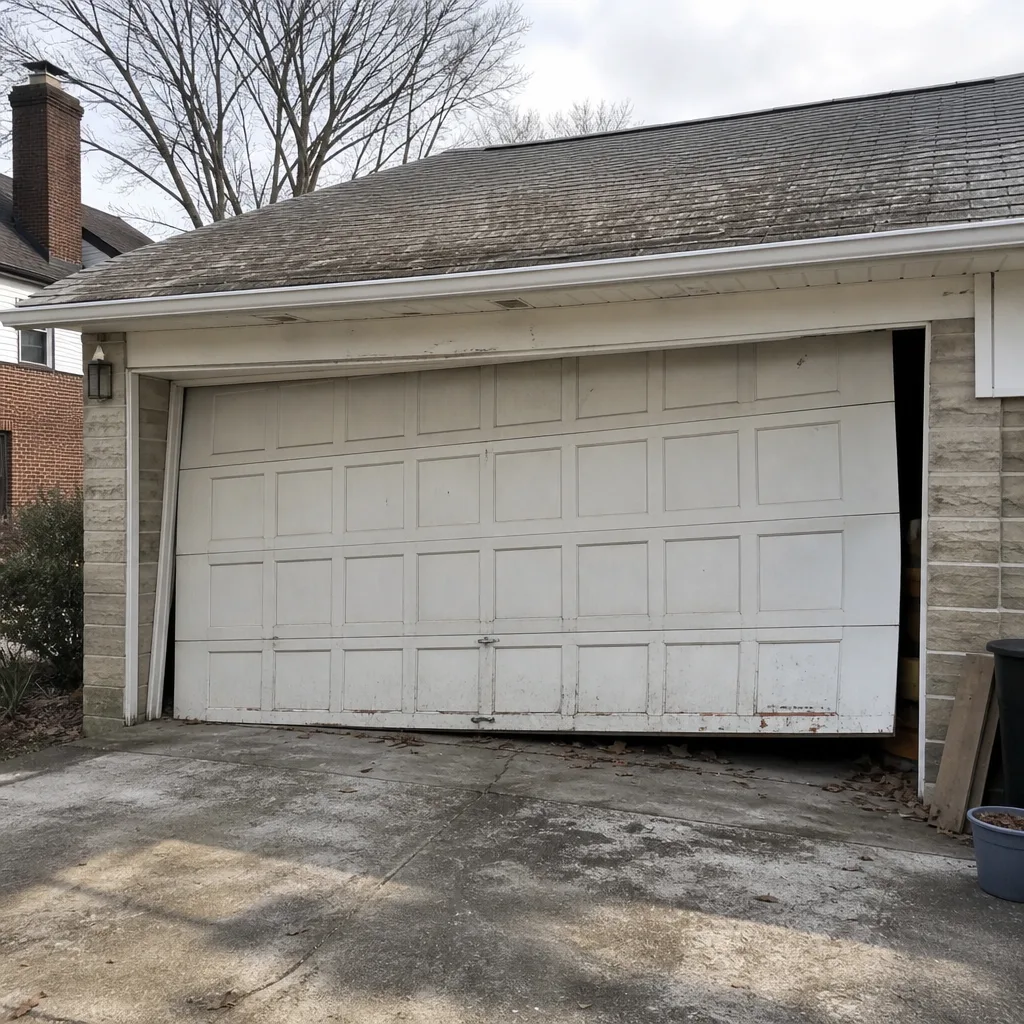 Before
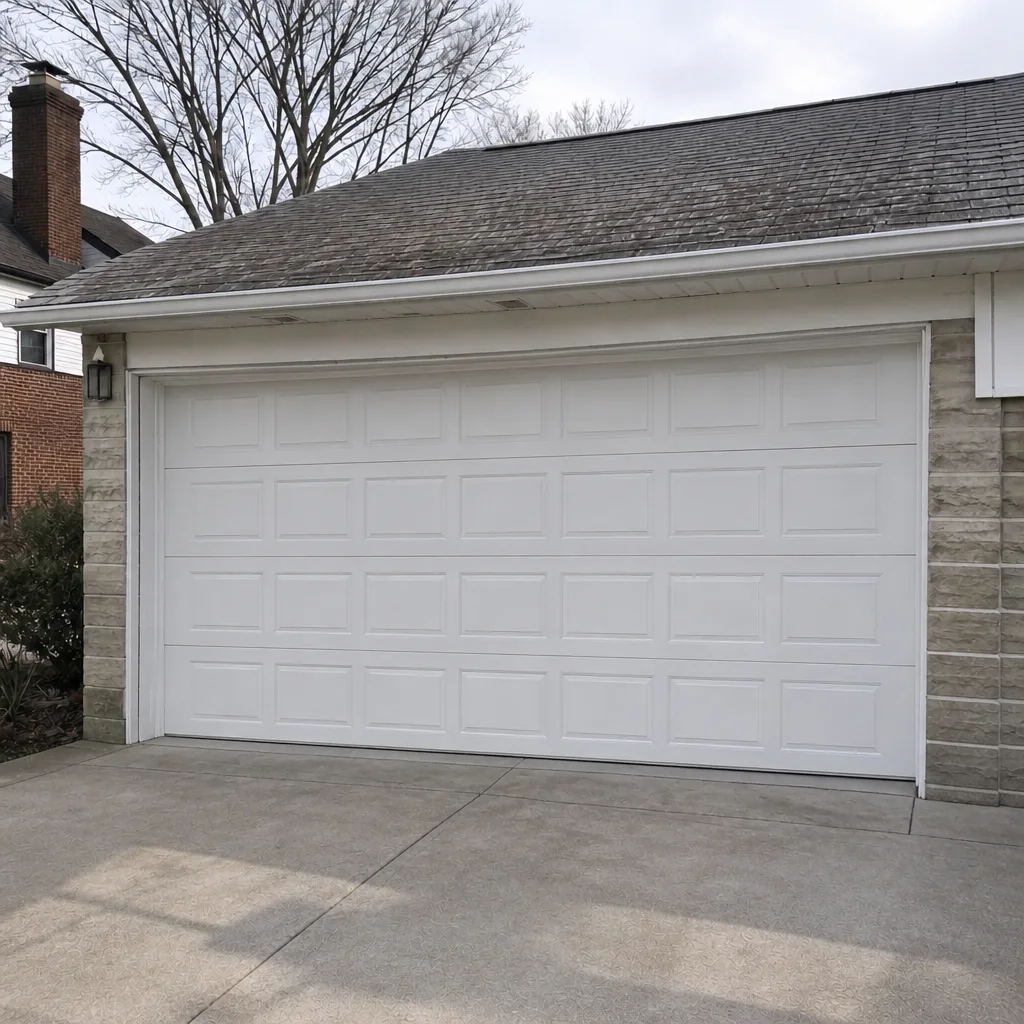 After
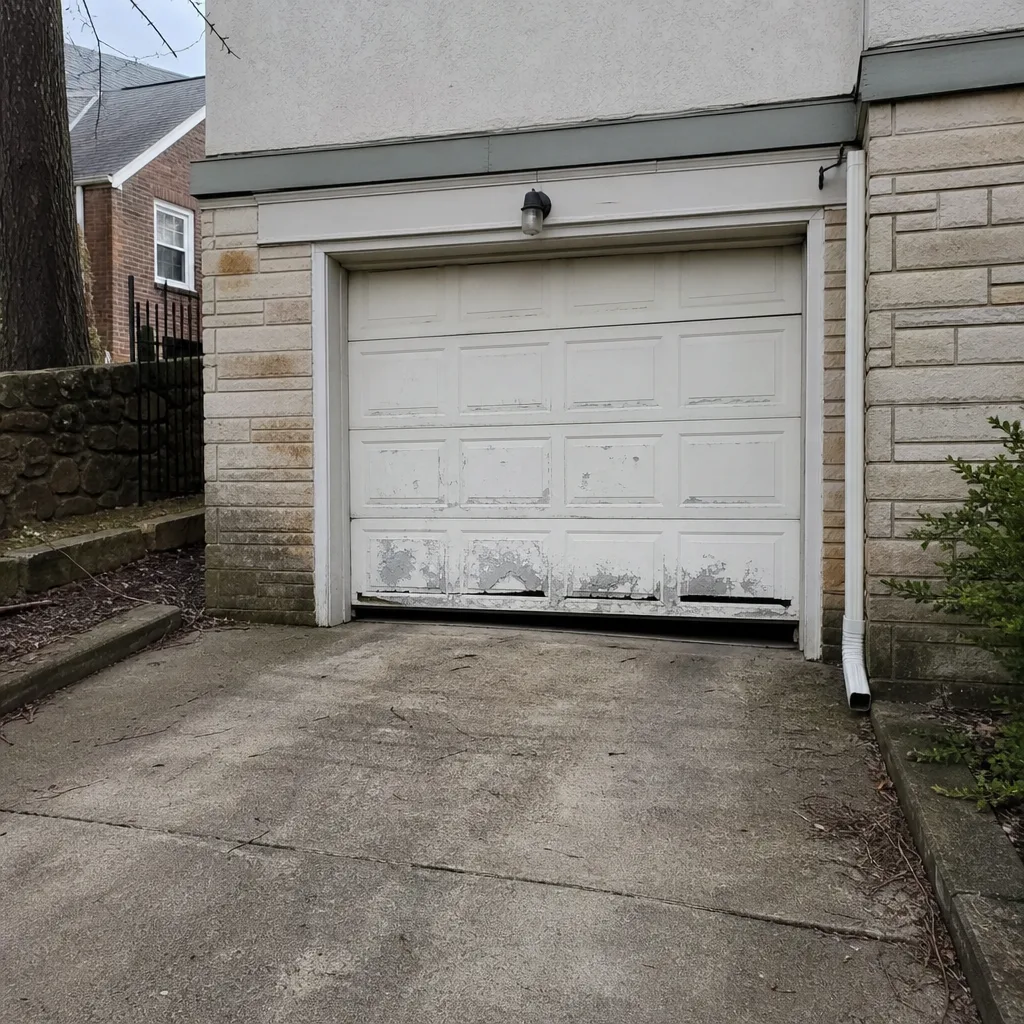 Before
 After
 Before
 After
When to Call a Professional
Call a professional the same day if you see or hear any of the following: a loud bang followed by a door that won’t lift, a visible gap in a torsion spring or a dangling extension spring, a frayed or kinked cable, a door that reverses with the path clear, or a door hanging visibly crookedly on one side. These are the cases where the component carries stored tension or the door’s full weight, and handling them yourself risks injury.
Schedule a repair within a few weeks for grinding, squealing, worn rollers, a new rattle, or weatherstripping damage. And if the door is older and you don’t know its history, a professional inspection once a year on top of your own monthly check is the best insurance you can give it. Garage Door Repair Shadyside offers free estimates in Shadyside – call (833) 345-5091. We work on every major brand already in the neighborhood, from Clopay and Amarr to LiftMaster, Chamberlain, Genie, Wayne Dalton, Craftsman, and Raynor, so you don’t have to switch systems to get a repair.
Frequently Asked Questions
A visible gap in a torsion spring is the most serious warning sign and should be treated as a same-day call. It means the coil has already failed. The door stays up because the cable and the other spring – if you have one – are holding it, and neither is designed to do that alone. Don’t cycle the door. Call for same-day service.
No. Springs and cables carry enough stored energy to cause serious injury, and both require specific tools and training to release safely. A trained technician does this every week and can tell you exactly what went wrong. We treat Garage Door Repair Shadyside as a specialist service for this reason: springs and cables aren’t general handyman work.
It’s serious enough to call for an inspection soon. A door that hesitates before moving is usually showing that the spring has lost tension and the opener is working harder to lift it. That hesitation grows over weeks to months. A same-week appointment is the right call, and if it gets worse – a longer pause, a louder strain – treat that as same-day. Call (833) 345-5091 for a free estimate in Shadyside.
It’s almost never software. Modern openers reverse when the safety sensors or the force limit is triggered, and both of those point to hardware. Check the sensors first – a knocked sensor or dirty lens is the most common cause. If the sensors are clean and aligned, the door is binding on the tracks or dragging on the spring balance. Same-day repair is a good idea before the door reverses on a car or a child.
A visual inspection monthly and a full professional inspection once a year is a good rhythm for a Shadyside home. The monthly check should include the balance test with the door disengaged, the spring gap check, and a walk along the cables and tracks. The professional inspection adds opener diagnostics – codes, force limits, safety sensor alignment – that most homeowners don’t have the tools to check.
We work on all the major garage door and opener brands, including LiftMaster, Chamberlain, Genie, Clopay, Amarr, Wayne Dalton, Craftsman, and Raynor. That covers the vast majority of doors and openers on Shadyside homes. If you’re not sure of your brand, look for the sticker on the opener’s motor unit or the label inside the top door section. A technician can identify it in seconds. Call (833) 345-5091 for a free estimate.
The Bottom Line
Garage doors rarely fail without warning. The problem is that the warnings are quiet: a hesitation, a fading grind, a strand of cable standing away from the rest, a tiny gap in a spring coil. Learn the sounds and the visual signs in this guide, run the monthly inspection, and treat the same-day list as genuinely same-day. A door that announces itself today is a repair. A door that’s ignored becomes a chain of repairs – one that starts with a cable and ends with a panel. In Shadyside, the wet winters and cold snaps accelerate every part of that chain. If your door is telling you something and you’re not sure what, call us.
For a free estimate on any warning sign you’ve found, call Garage Door Repair Shadyside at (833) 345-5091. We work on every major brand, we’ll tell you honestly whether it’s a repair or a replacement, and we’ll have a specialist on it fast.
Written by the team at Garage Door Repair Shadyside.