Last updated November 21, 2026
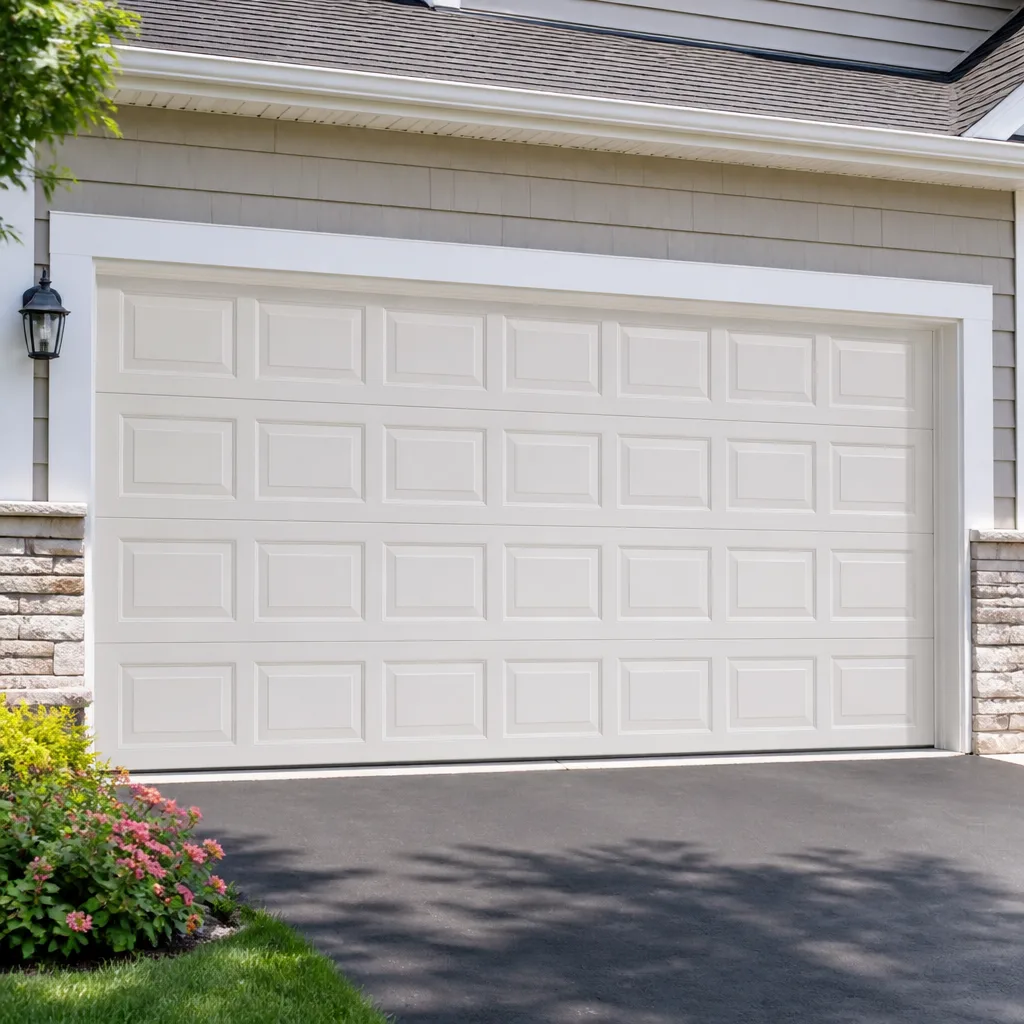 Raised-panel steel
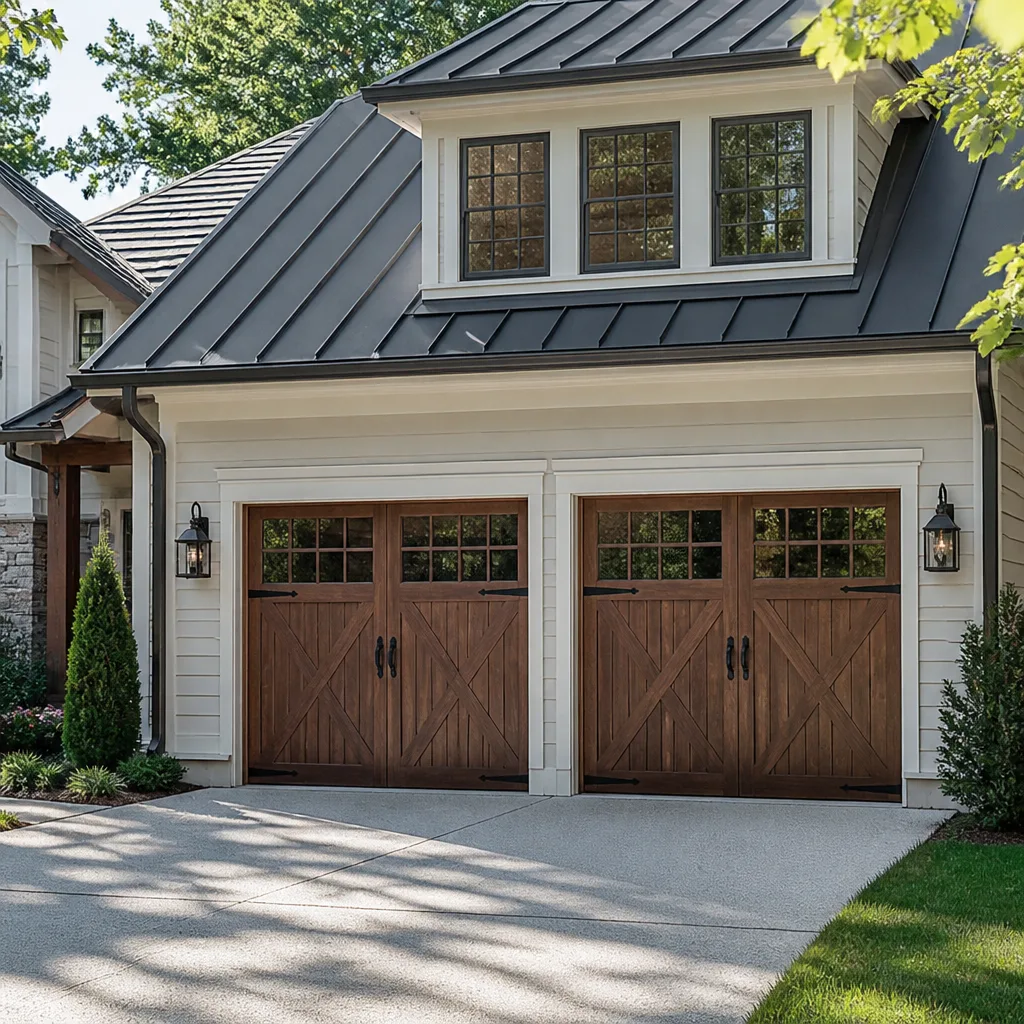 Carriage house
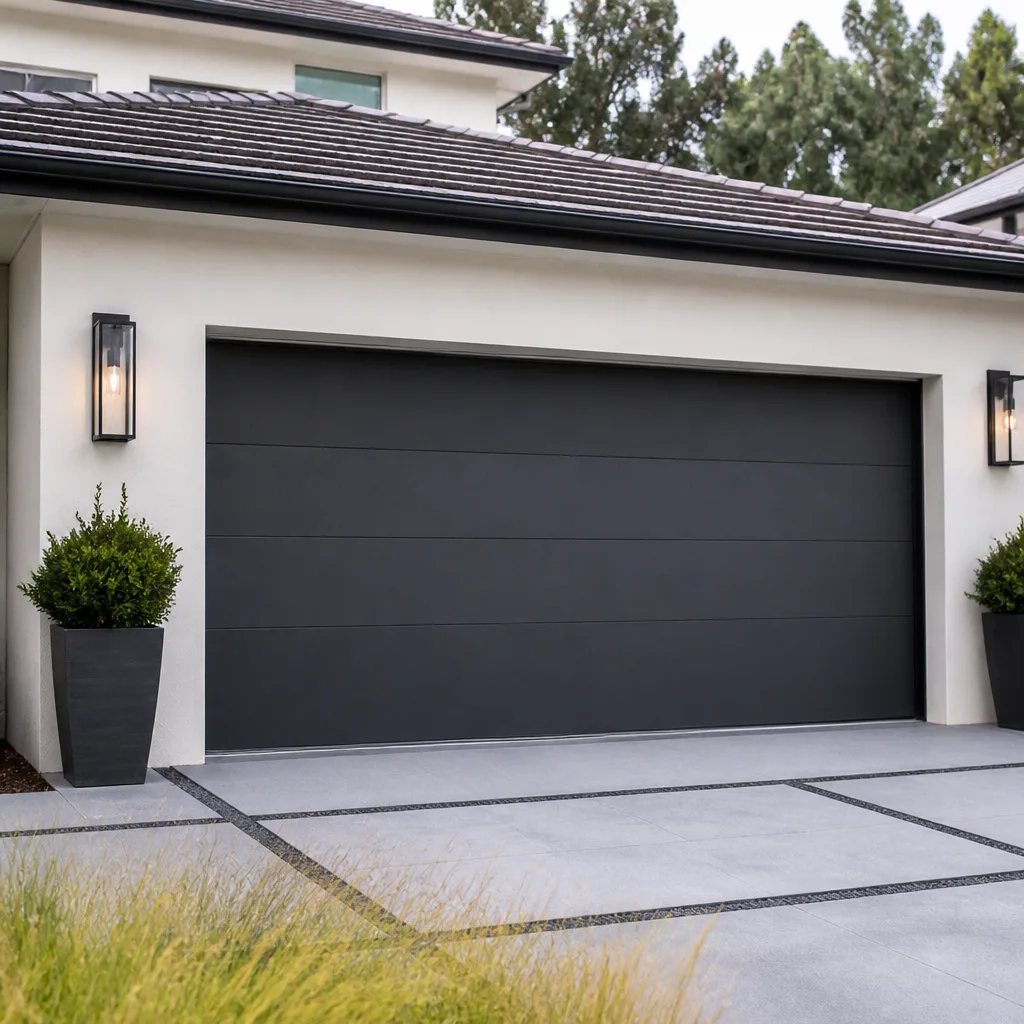 Modern flush
 Full-view glass
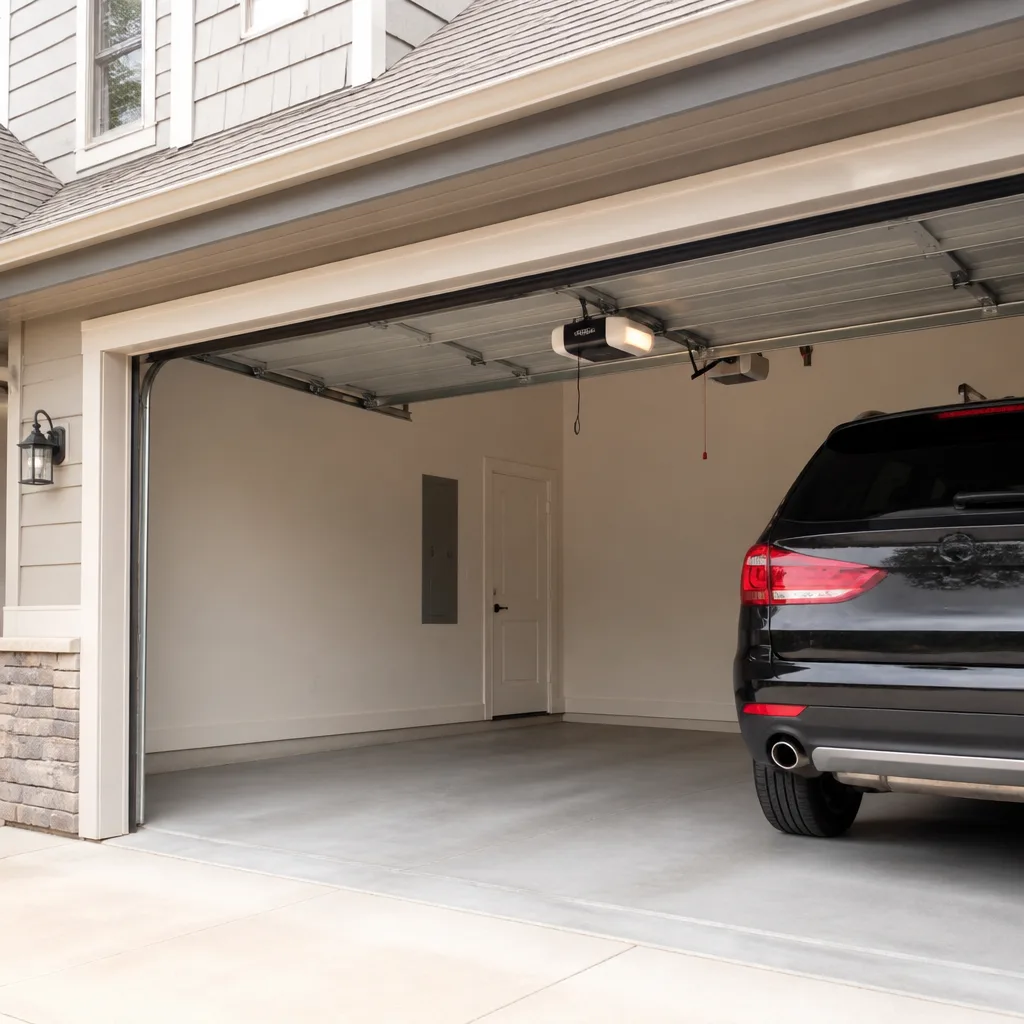 LiftMaster openers
 Chamberlain openers
Full 25-point door and opener safety check with every visit - springs, cables, rollers, tracks, and your LiftMaster or Chamberlain opener included
You get a price before we start. It does not change when the pro arrives.
Get your free estimateDIY vs Professional Garage Door: The Shadyside Homeowner’s Decision Guide
A torsion spring under full tension stores enough energy to break a wrist or worse. Not because homeowners are careless, but because the only tool that releases it safely costs around $300 and gets used twice in a technician’s career. That single fact reframes the whole DIY debate. The question isn’t whether you’re handy enough to work on a garage door. It’s which specific tasks carry injury and liability consequences that make self-service genuinely dangerous, and which ones are simple enough that hiring out wastes your money. This guide draws that line task by task, with the Shadyside housing stock and alley layouts in mind.
Quick Answer
Homeowners can safely handle lubrication, photo-eye alignment, weather seal replacement, remote pairing and visual inspections. Torsion spring work, cable replacement and track realignment belong with a trained technician because the stored energy and pinch points can cause serious injury even when you follow instructions correctly. Everything in between depends on your door’s age, headroom and how it’s mounted, and in Shadyside’s older garages that usually tips borderline jobs toward professional repair.
Styles & brands we work with
- Raised-panel steel
- Carriage house
- Modern flush
- Full-view glass
- LiftMaster openers
- Chamberlain openers
Table of Contents
- The Task-by-Task Breakdown: What’s Safe and What Isn’t
- Why Torsion Springs Injure People Who Know What They’re Doing
- The Real Cost of Doing It Yourself Once
- How DIY Work Affects Your Door and Opener Warranty
- Shadyside Complexity Factors That Change the Math
- Opener Repair: The Middle Ground
- A Simple Decision Framework
- Common Mistakes to Avoid
The Task-by-Task Breakdown: What’s Safe and What Isn’t
Most garage door advice online splits into two useless camps: “never touch it, call a pro” or “here’s how to save money doing it yourself.” Neither respects the actual mechanical differences between a squeaky hinge and a loaded torsion spring. Here’s our honest division of labor, based on what we see on repair calls around Shadyside.
Tasks a homeowner can do safely
- Lubrication. A garage door has hinges, rollers, and a track that benefit from a proper garage door lubricant once or twice a year. This is the single most effective thing you can do to extend your door’s life, and it requires nothing more than a rag and a can.
- Photo-eye alignment. If your door reverses immediately after closing, the safety sensors near the floor are usually misaligned or blocked. Wiping the lenses and nudging them back toward each other fixes most of these. Never bypass or tape over a sensor.
- Weather seal replacement. The rubber or vinyl strip along the bottom of the door wears out and lets in drafts, water and pests. Sliding a new seal into the retainer is a straightforward job anyone can manage.
- Remote and keypad pairing. Reconnecting a remote to a LiftMaster or Chamberlain opener is a button-press sequence, not a repair.
- Visual inspection. Look at the springs for gaps or rust, check that the door hangs level, and listen for new noises. Knowing what’s normal helps you describe the problem accurately when you do call.
Tasks that require a trained technician
- Any torsion spring work. Replacement, adjustment, or even “just tightening” a spring. This is the highest-risk task on the entire door, and it’s covered in detail below.
- Extension spring replacement. Lower energy than torsion, but still under heavy tension and still capable of causing injury when a worn spring lets go.
- Cable replacement. Cables run under extreme tension and are the parts that most often cause lacerations when they snap.
- Track realignment. A bent track throws the door out of balance and can drop it. Straightening a track requires understanding the door’s geometry, not just a hammer.
- Panel replacement and section swaps. A door panel is heavy, awkward, and often held by tensioned hardware. Getting one out and another in without damaging the surrounding sections takes two people who know the sequence.
- Opener drive system and logic board work. Gear assemblies, travel limits, and circuit boards are electrical repairs with specific calibration steps.
If you need help with a door that’s already off its track or won’t move, our Garage Door Repair Shadyside page covers what happens on a service call and how we approach the common failures in this neighborhood.
Why Torsion Springs Injure People Who Know What They’re Doing
The danger isn’t a mystery, and it isn’t about carelessness. It’s mechanical, and understanding it is the reason most homeowners should stop before they start.
A torsion spring holds the entire weight of your door in stored rotational energy. When the door is closed, that spring is wound to a specific number of turns. To replace it, you have to release that tension in a controlled way, then rewind the new spring to the correct count.
Here’s what makes this different from other “dangerous” home repairs. The spring doesn’t fail gradually. It releases all at once, and the winding bars you need to control it are steel rods inserted into the spring’s winding cone. If a bar slips out of the cone while the spring is loaded, both the bar and the spring can move with enough force to break bones. That’s not a warning about being sloppy. That’s what happens when the geometry is right and the tool is right.
The tooling problem compounds it. The winding bars and the knowledge to use them safely are things a professional carries every day. A homeowner buying a set for one repair is buying a tool they’ll handle once, at the worst possible moment to learn. That’s the core argument against DIY spring work: not that you can’t follow a video, but that the first time you do it is the riskiest time, and there’s no practice round.
This is why spring replacement is a core service for us rather than an add-on. Our technicians have up to 13 years of experience, and the reason that matters here isn’t speed. It’s that loading and unloading a torsion spring is a task with almost no margin for a slip. For garage door repair on a door with a broken spring, a trained technician is the right call every time.
One more practical note: a door with a broken torsion spring should not be opened manually. It’s far heavier than it feels, and lifting it can cause the remaining spring or the cables to fail unpredictably. Leave it down and call.
The Real Cost of Doing It Yourself Once
Homeowners often frame DIY as “free labor plus parts” versus “parts plus labor.” That framing misses the tooling cost, which is the number that usually flips the math.
A torsion spring is a modest part. Two matching springs run roughly double one, and matched pairs are almost always replaced together because a new spring next to an old one will load unevenly. The part cost is reasonable. The tool cost is not, when you’re buying it for one job.
- Winding bars: A quality pair runs roughly $300. Cheap ones bend or strip, which is worse than not having them.
- A proper set of winding bars is the minimum. Improvised tools (screwdrivers, punches) are the single most common factor in spring-related injuries.
- Clamps and a vise grip setup for holding the door in place add more.
- Your time, twice: Once to research and once to do it, with no second attempt if you get the tension wrong.
Compare that to paying a technician for what is usually a short job. The professional arrives with the bars, the right spring for your door’s weight and height, and the experience to know how many turns it needs. You pay for the part, the labor, and the certainty that the door will be balanced when it’s done.
Where DIY genuinely saves money is the short list from the section above. Lubrication, sensor alignment and weather seals cost almost nothing in parts and require no special tools. Spending an hour on those twice a year is a better return than any single repair you could attempt yourself.
The tasks where the math gets interesting are the borderline ones: a single roller replacement, a hinge swap, a bent track you think you can persuade back into place. Those are worth a phone call to price before you decide.
How DIY Work Affects Your Door and Opener Warranty
Manufacturer warranties on garage doors and openers generally cover defects in materials and workmanship, and they generally don’t cover damage caused by installation or repair done by someone other than a qualified technician. That’s the plain version. The practical version matters more.
If you replace a spring yourself and a cable fails three months later, the cable failure may or may not be connected to your work, but proving that to a manufacturer is your problem, not theirs. A door that’s been worked on by an untrained hand is a door where the warranty conversation gets harder.
This applies to openers too. LiftMaster and Chamberlain units, along with Genie and other major brands, have specific installation and calibration requirements. A opener installed or adjusted incorrectly can void coverage on the unit itself, and it can also put strain on a door that wasn’t designed for that force setting.
There’s a second layer: the door and the opener are separate warranties from separate manufacturers, and a problem in one can affect the other. A door that’s been forced by a misadjusted opener is a door whose manufacturer has a reasonable question about how it was used.
None of this means you shouldn’t touch your door. It means the tasks that carry warranty risk overlap almost exactly with the tasks that carry injury risk. Springs, cables, track alignment, opener calibration. The safe DIY list is also the warranty-safe list, which is a convenient coincidence.
If your door or opener is still under a manufacturer’s warranty, keep your receipts and ask before you modify anything. A five-minute question is cheaper than an argument later.
Shadyside Complexity Factors That Change the Math
Garage door work in Shadyside has a few local characteristics that push borderline tasks firmly toward professional territory. These aren’t quirks of one street. They’re the shape of the housing stock.
Low headroom. Many Shadyside garages were built for smaller cars and shorter doors. Low-headroom setups use different spring configurations and different track geometry, and they leave less room to work safely around a loaded spring. If your door sits close to the ceiling, that changes how a spring replacement has to be approached.
Alley-only access. A lot of Shadyside garages open onto alleys rather than driveways. That affects how a service call is set up and how equipment gets to the door, but it also affects you: working alone in a narrow alley with a door that could drop is a worse situation than working in an open driveway. If something goes wrong, there’s less room to get clear.
Aging hardware. Older doors in Shadyside often have original hinges, rollers and springs that have been in place for a long time. Old hardware is more likely to be seized, rusted or already stressed. A task that would be simple on a newer door, like swapping a roller, can turn into a fight with a rusted hinge plate on a door that’s been sitting in place for years.
Mixed door types. The neighborhood has a wide range of door styles and vintages, which means there’s no single “standard” setup. A homeowner watching a video for a sectional door with a torsion spring may be looking at a door with extension springs, or a one-piece door, or a low-headroom configuration. Getting the wrong instructions is worse than having none.
None of this makes Shadyside doors unusual. It makes them varied, and variety is exactly what generic DIY advice can’t account for.
Opener Repair: The Middle Ground
Openers sit in an awkward spot in the DIY conversation. They’re electrical, which sounds intimidating, but many common opener problems are simple and don’t involve the high-tension parts of the door.
Things you can often handle yourself:
- Replacing remote batteries and re-pairing remotes.
- Clearing obstructions from the safety sensors and realigning them.
- Resetting a wall control or keypad after a power outage.
- Checking that the manual release cord works and the door can be operated by hand.
Things that belong with a technician:
- Gear and sprocket replacement inside the opener housing.
- Logic board failures and error codes that don’t clear.
- Travel limit and force adjustment, which affects how hard the opener pushes on the door.
- Smart-home integration problems with LiftMaster and Chamberlain units that won’t pair after repeated attempts.
Opener repair is a distinct specialty for us, and it’s where brand familiarity pays off. Our technicians work across LiftMaster, Chamberlain, Genie and Clopay systems among others, so the diagnostic path is familiar regardless of what’s already on your ceiling. For garage door opener repair, the goal is a same-visit fix rather than a return trip waiting on a part.
A Simple Decision Framework
When you’re standing in front of a door that’s misbehaving, work through these questions in order. The first “yes” tells you where the job belongs.
- Does the task involve a spring, a cable, or the door’s balance? If yes, call a professional. This is the highest-risk category and the one with the clearest line.
- Does the task involve opening the opener housing or adjusting travel limits? If yes, call a professional. Electrical work and force calibration on a LiftMaster or Chamberlain unit is not a homeowner job.
- Is the door stuck open, off its track, or hanging unevenly? If yes, don’t force it. A door in that state can drop or swing unpredictably. Call.
- Is the problem a sensor, a remote, a seal, or a squeak? If yes, it’s likely a safe DIY job. Try the simple fix first.
- Is the door over 15 years old with original hardware? Even simple tasks get harder on aged hinges and rollers. Get an estimate before you start.
- Is the door under a manufacturer’s warranty? If yes, check before you touch it. DIY work can complicate a claim.
If you get through all six and you’re still unsure, that’s your answer. A free estimate costs nothing and tells you whether the job is worth doing yourself.
When the door itself is past repair, the decision shifts from DIY versus repair to repair versus replace. Our garage door installation page walks through how a replacement is measured and scheduled, which is a different conversation from an emergency repair.
Common Mistakes to Avoid
- Using a screwdriver as a winding bar. This is the most common cause of serious spring injuries. A screwdriver doesn’t seat properly in the winding cone, and when it slips out, the spring releases with nothing holding it. There’s no safe way to improvise this tool.
- Forcing a door that’s stuck or off its track. If a door won’t move smoothly, something is broken or misaligned. Pushing harder can drop it, damage the panels, or bend the track further. On an older Shadyside door with original hardware, that damage often means replacing parts that were fine before.
- Taping over or bypassing a safety sensor. A photo-eye that’s been taped over or disconnected disables the one feature that stops the door from closing on a person or pet. If the sensor keeps tripping, fix it or call. Don’t disable it.
- Replacing one spring of a pair. A new spring next to a worn one loads unevenly, and the old one fails sooner. Matched pairs are replaced together for a reason, and the second spring usually costs about what the first did.
- Adjusting opener force to compensate for a heavy door. Turning up the force setting on a Chamberlain or LiftMaster opener makes the door close, but it’s masking a balance problem in the door. The opener wears out faster and the door is harder to stop by hand. Fix the door, not the force limit.
- Working alone in a narrow alley. If something goes wrong with a door, having a second person nearby matters. Alley-only garages in Shadyside leave less room to get clear, and a solo job goes wrong faster than a job with someone watching.
- Skipping lubrication because it seems too simple. A dry door wears out its rollers and hinges faster, and a squeaky hinge is often the first sign. Two minutes with a lubricant twice a year prevents more repairs than any technique you’ll find online.
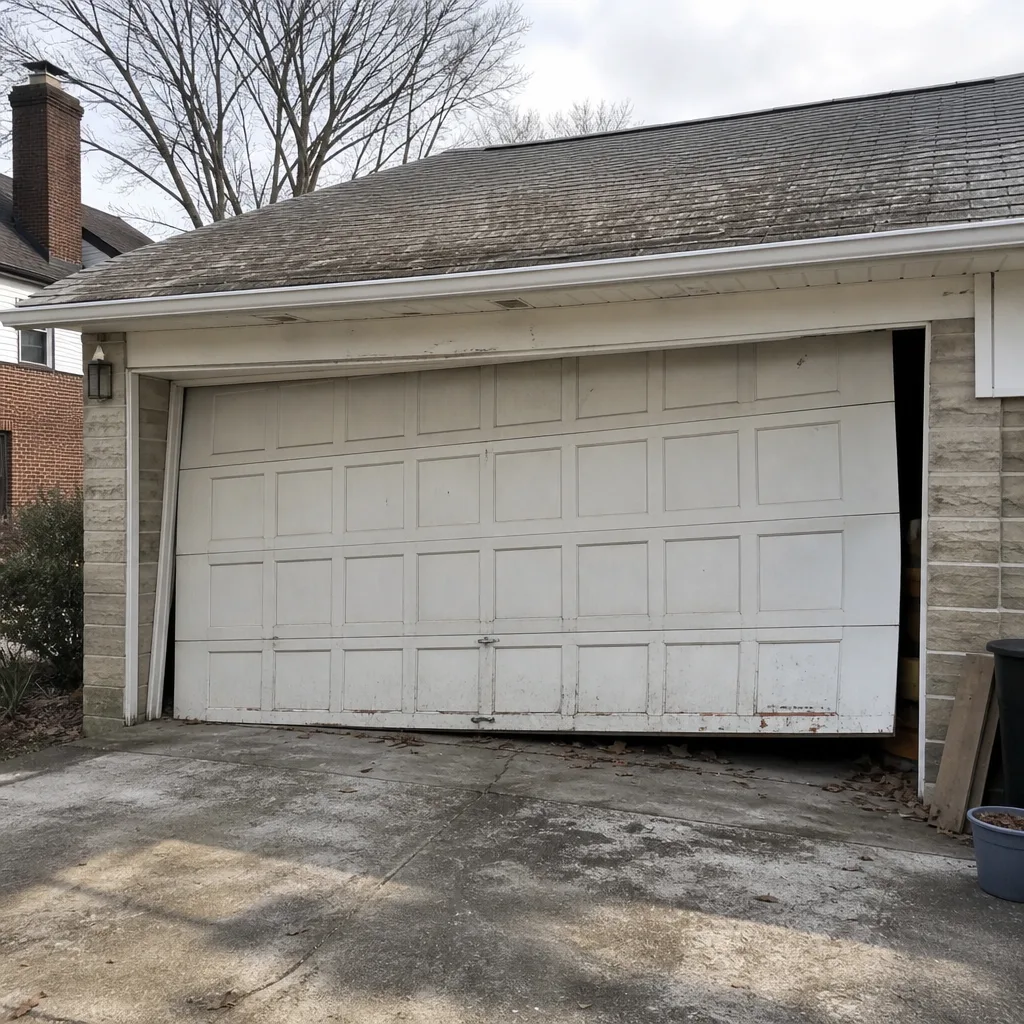
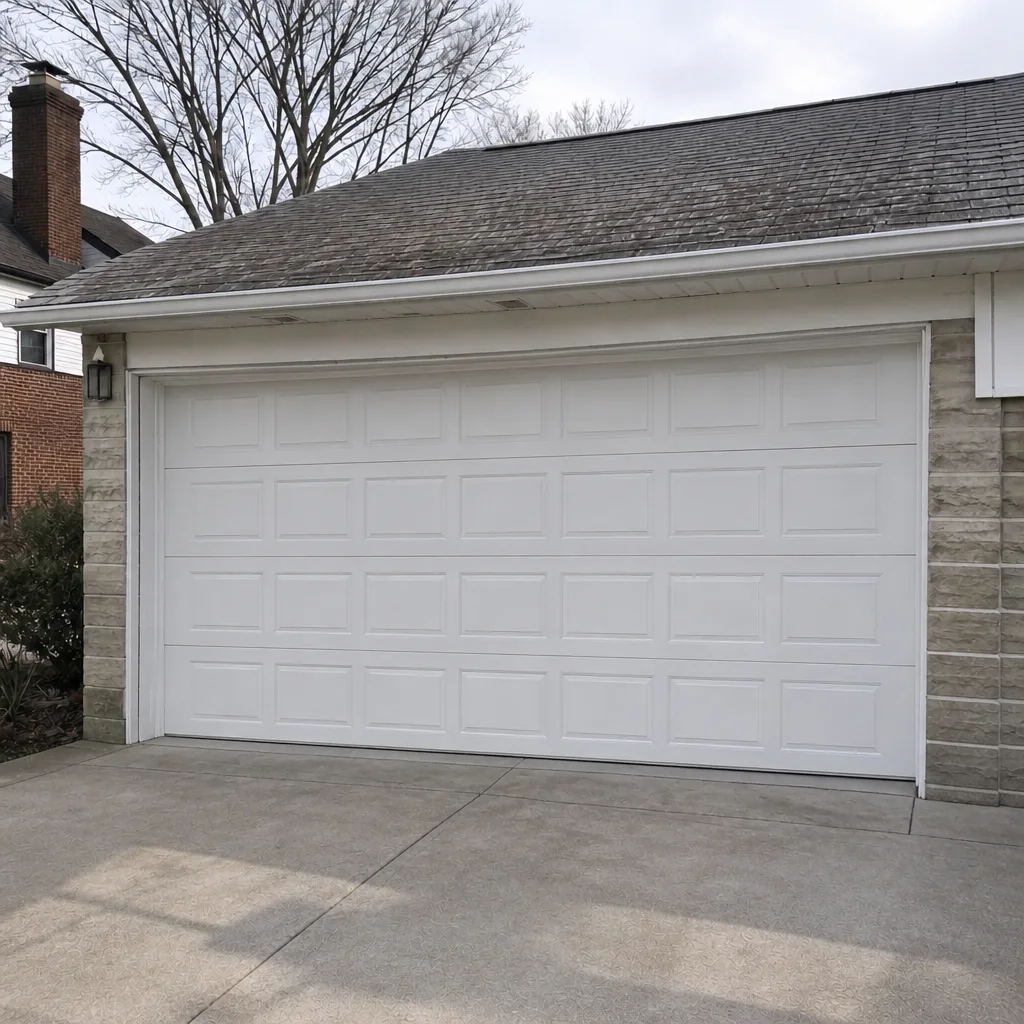
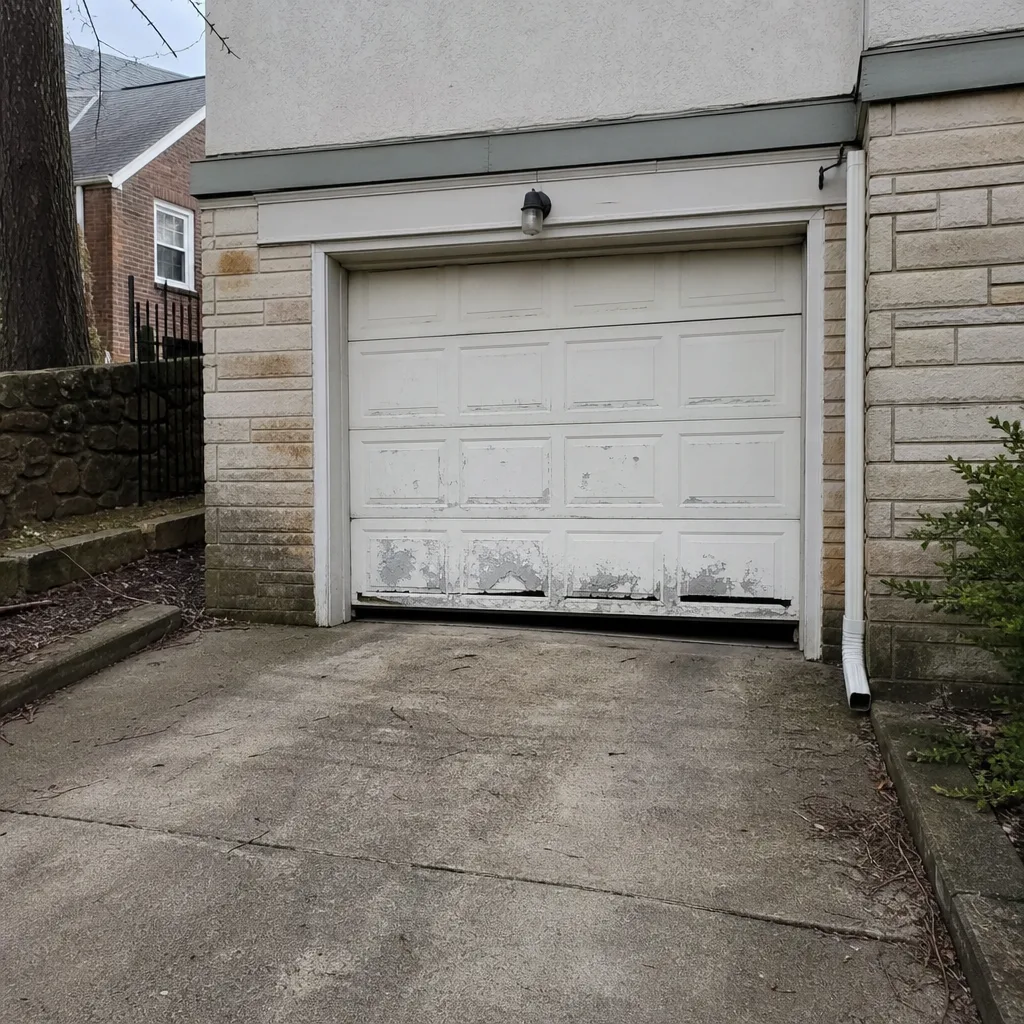
See the difference
 Before
 After
 Before
 After
 Before
 After
When to Call a Professional
Call a professional for any spring or cable work, for a door that’s off its track or hanging unevenly, for opener problems that involve the housing or travel limits, and for any job where you’d be working alone on an older door. In Shadyside, add low-headroom garages and alley-only access to that list, because both reduce your room to work safely. If you’re not sure which category a job falls into, that uncertainty is its own reason to get an estimate. Garage Door Repair Shadyside offers free estimates in Shadyside. Call (833) 345-5091 and we’ll tell you plainly whether the job is worth doing yourself. Our technicians work on all eight major brands, so whatever is on your door, the answer will be accurate.
Frequently Asked Questions
You can physically buy the parts, but you should not replace a torsion spring yourself. The spring stores enough energy to break bones if it releases unexpectedly, and the winding bars required to control it cost around $300 for a set you’d use once. Call (833) 345-5091 for a free estimate instead.
Lubrication, photo-eye alignment, weather seal replacement, remote pairing and visual inspections are all safe for a homeowner. These tasks require no special tools and carry no stored-energy risk. Anything involving springs, cables, track alignment or opener internals belongs with a technician.
It can. Manufacturer warranties generally cover defects in materials and workmanship but not damage from installation or repair by someone other than a qualified technician. If your door or opener is still under warranty, check before you modify anything, and keep your receipts. Call (833) 345-5091 if you want to know how a repair affects coverage.
For small tasks, DIY is cheaper. For spring, cable or track work, hiring a professional is usually cheaper once you account for the tools you’d need to buy for one job. The written estimate sets the final price, and estimates are free, so the comparison costs you nothing to make.
For repair calls, same-day service is often available, and dispatch runs from 7am to 7pm. If your door is stuck open, off its track, or won’t move, call (833) 345-5091 and describe what’s happening. We’ll tell you what’s possible and when we can get to you.
The biggest mistake is using an improvised tool on a loaded spring. Screwdrivers and punches don’t seat properly in the winding cone, and a slip releases the full stored energy with nothing to stop it. The second biggest is forcing a door that’s already stuck or off its track. Call (833) 345-5091 for a free estimate before either one.
The Bottom Line
The DIY versus professional question for garage doors comes down to which tasks carry injury and warranty consequences, not whether you’re handy. Lubrication, sensor alignment, weather seals and remote pairing are safe and worth doing yourself. Springs, cables, track work and opener internals belong with a trained technician, and the tooling cost alone makes DIY a bad trade for a single repair. In Shadyside, low headroom, alley access and aging hardware push the borderline jobs further toward professional. Our technicians have up to 13 years of experience across LiftMaster, Chamberlain, Genie, Clopay and other major brands, and we’ll give you a straight answer about which side of the line your job falls on.
If your door needs attention, call Garage Door Repair Shadyside at (833) 345-5091 for a free estimate. We’ll tell you whether it’s a job you can handle yourself, and if it isn’t, the price is quoted and agreed before any work starts.
Written by the team at Garage Door Repair Shadyside.